Collaborative Research Project Seeks Volunteers with Parkinson’s Disease to Participate in the Evaluation of the Benefits of an Individualized Exercise Program
- The study involves professionals from Navarrabiomed-UPNA and the University of Navarra Clinic.
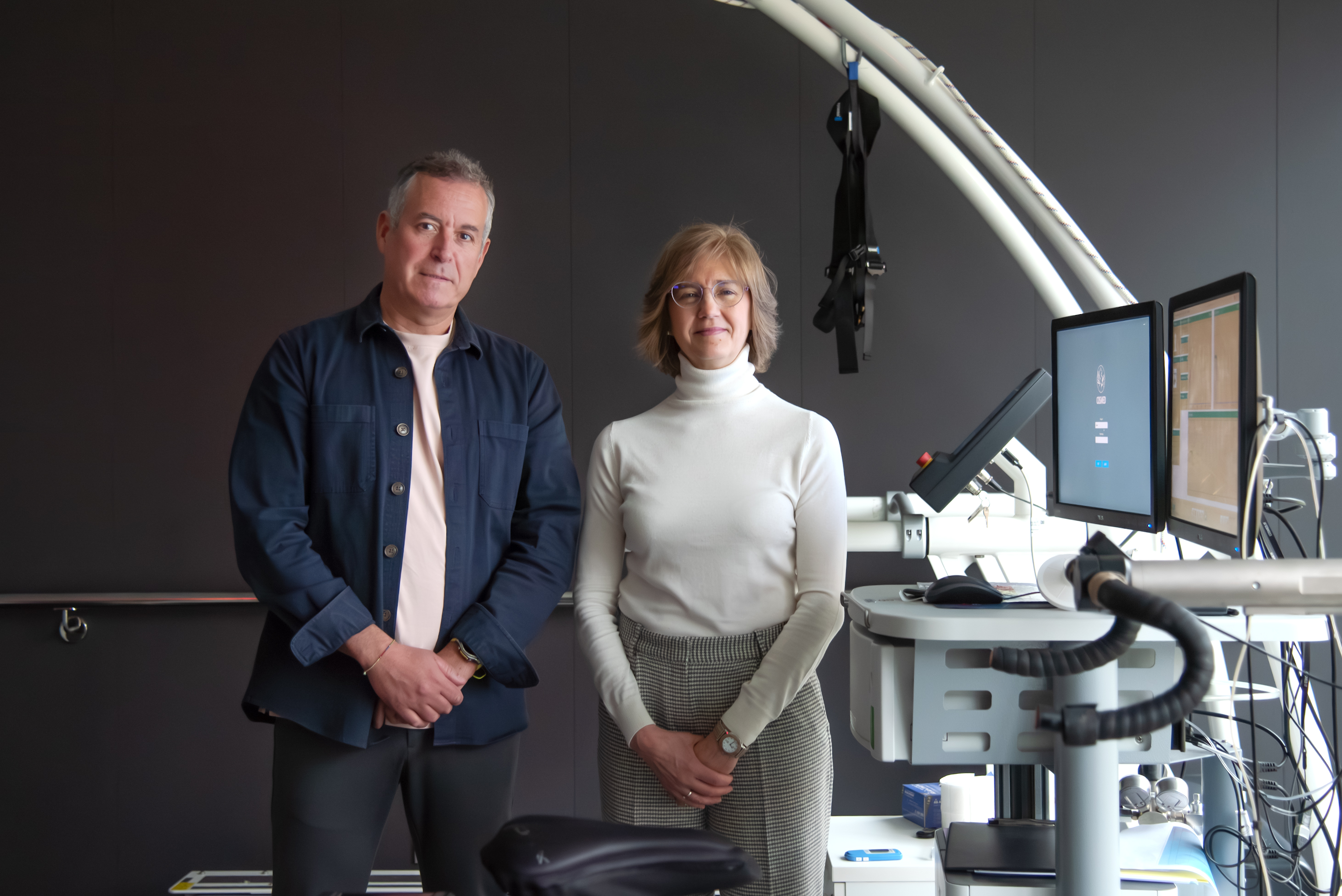
Researchers from the Exercise, Health, Metabolism and Functional Capacity Unit of Navarrabiomed-Public University of Navarre (UPNA) and the Department of Neurology at the University of Navarra Clinic are conducting a collaborative study aimed at analyzing the benefits of an individualized exercise program for people with Parkinson’s disease. The research team is seeking volunteers interested in participating in a 16-week exercise program specifically designed and tailored to each participant’s individual needs and characteristics. Today, April 11, marks World Parkinson’s Day.
This is a public-private study, funded by the Carlos III Health Institute, managed through the Navarra Institute for Health Research (IdiSNA), and coordinated by the University of Navarra Clinic. The study will evaluate the progress of participants who follow an exercise program prescribed by Navarrabiomed’s Exercise Unit. The aim is to compare their outcomes with those of patients receiving only conventional pharmacological treatment and not participating in the physical activity program.
According to Dr. María Cruz Rodríguez Oroz, Director of the study and Head of the Department of Neurology at the University of Navarra Clinic:
“Our goal is to study the impact of a program of this nature on both motor and cognitive abilities in people with Parkinson’s disease, assessing improvements not only in movement but also in functions such as memory and attention. Ultimately, we hope to contribute to a better quality of life for these patients.”
The program consists of two exercise sessions per week on non-consecutive days over approximately four months. Dr. Mikel Izquierdo Redín, Principal Investigator of the Exercise, Health, Metabolism and Functional Capacity Unit at Navarrabiomed and Professor at UPNA, explains:
“At the beginning and end of the program, participants will undergo a comprehensive assessment battery including evaluations of functional capacity, muscular strength, cardiovascular endurance, and body composition. This will allow us to obtain an individualized profile for each participant and objectively monitor their progress throughout the intervention.”
In addition to routine clinical assessments, the Department of Neurology at the University of Navarra Clinic will conduct studies of participants’ brain structure and function using magnetic resonance imaging (MRI) and positron emission tomography (PET) scans. Metabolic changes will also be analyzed through blood samples.
A Disease with Increasing Prevalence
Parkinson’s disease is a neurodegenerative disorder of the central nervous system characterized by the progressive loss of neurons in specific regions of the brain. This process leads to symptoms such as rigidity, generalized slowness of movement, impaired motor coordination, and resting tremor, among others. According to the Spanish Society of Neurology, Parkinson’s disease is the neurological disorder that has experienced the greatest increase worldwide in terms of prevalence, mortality, and disability burden. In recent years, its prevalence has increased by more than 80%, while the number of deaths associated with the disease has doubled.
Dr. María Cruz Rodríguez Oroz, Head of the Neurology Department at the University of Navarra Clinic and Principal Investigator of the project, notes: “Although the progression of Parkinson’s disease varies considerably among patients, incorporating exercise into daily routines may help improve motor symptoms related to mobility and balance. It may also alleviate cognitive and mood-related symptoms through beneficial brain and metabolic adaptations.”
Patients interested in participating in the study can obtain further information by contacting:
Email: eduardosalinas@unav.es Telephone: +34 948 255 400 (Ext. 4529)