Navarrabiomed and UPNA Organize a Symposium Exploring the Links Between Microbiota and Disease
• The event brought together nearly 90 attendees interested in learning about the gut-brain axis and its influence on neurological health.
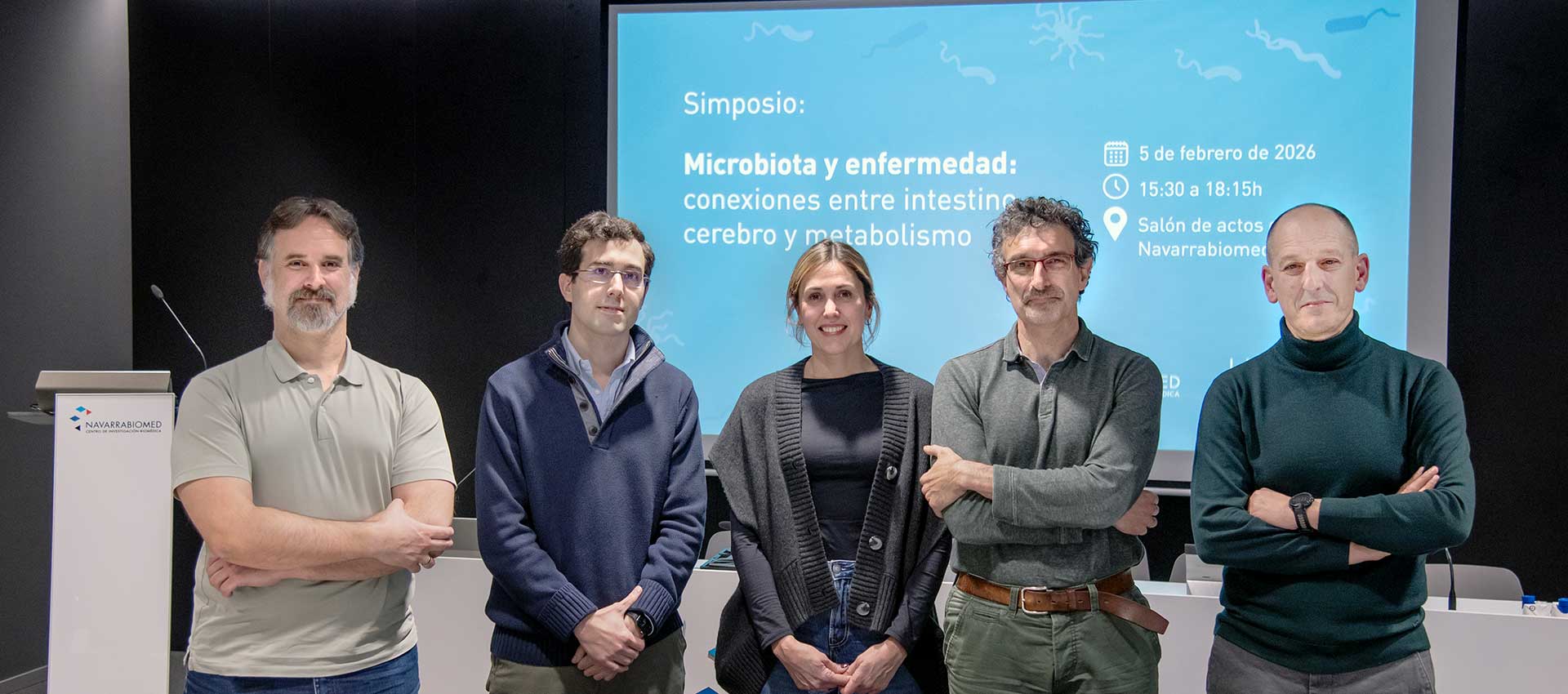
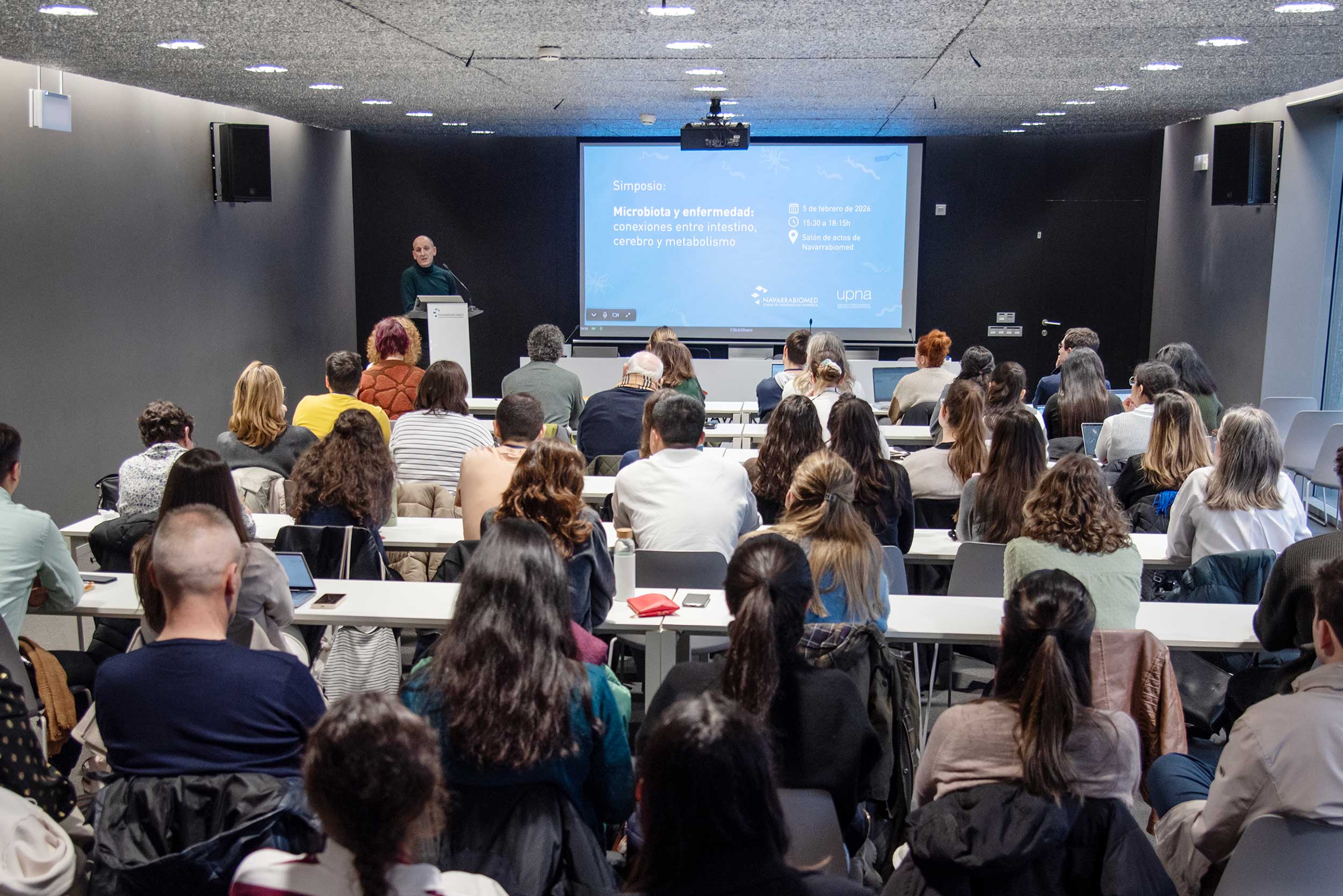
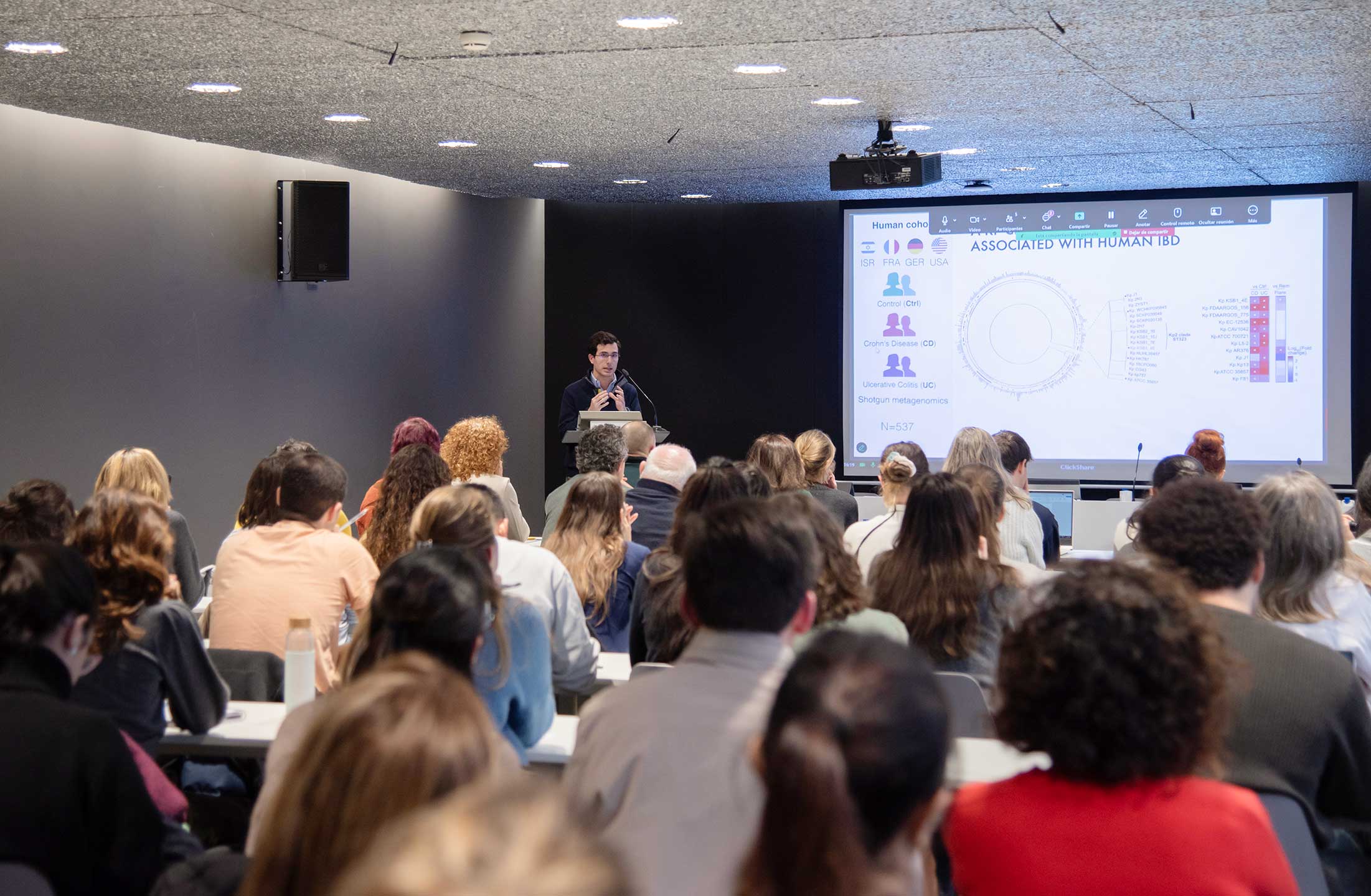
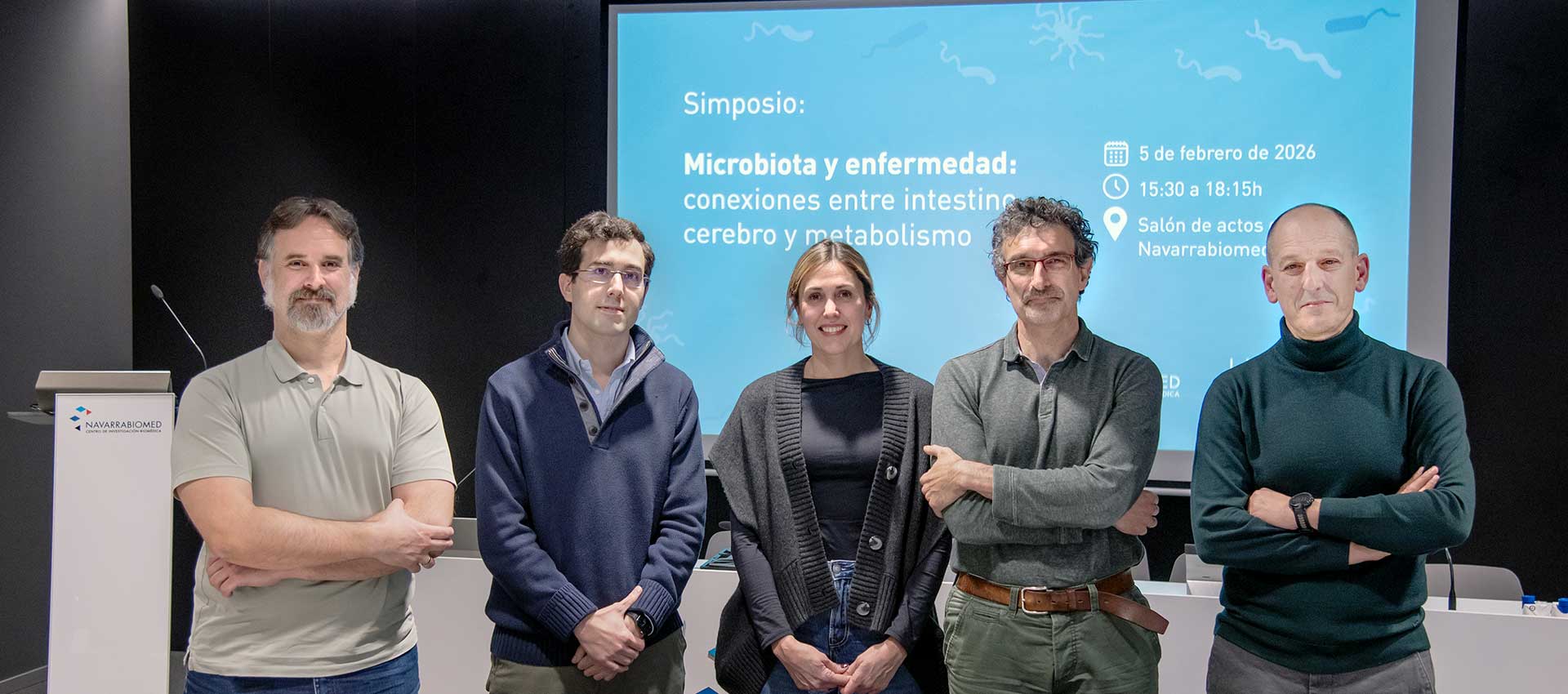
The gut microbiota, the community of microorganisms that inhabits the intestine, was the central focus of the symposium “Microbiota and Disease: Connections Between the Gut, Brain and Metabolism”, recently held at Navarrabiomed as part of the Master’s Degree in Research and Innovation in Biotechnology at the Public University of Navarre (UPNA). The event showcased the latest research on the gut-brain connection and its potential influence on neurological health to an audience of nearly 90 participants, including students, healthcare professionals, and researchers.
The symposium, coordinated by UPNA Professor and Navarrabiomed researcher Iñigo Lasa, is part of the course “Trends in Biotechnology” and aims to strengthen students’ academic training by connecting education with current challenges, emerging trends in the sector, and the latest advances in research.
Guest Speakers
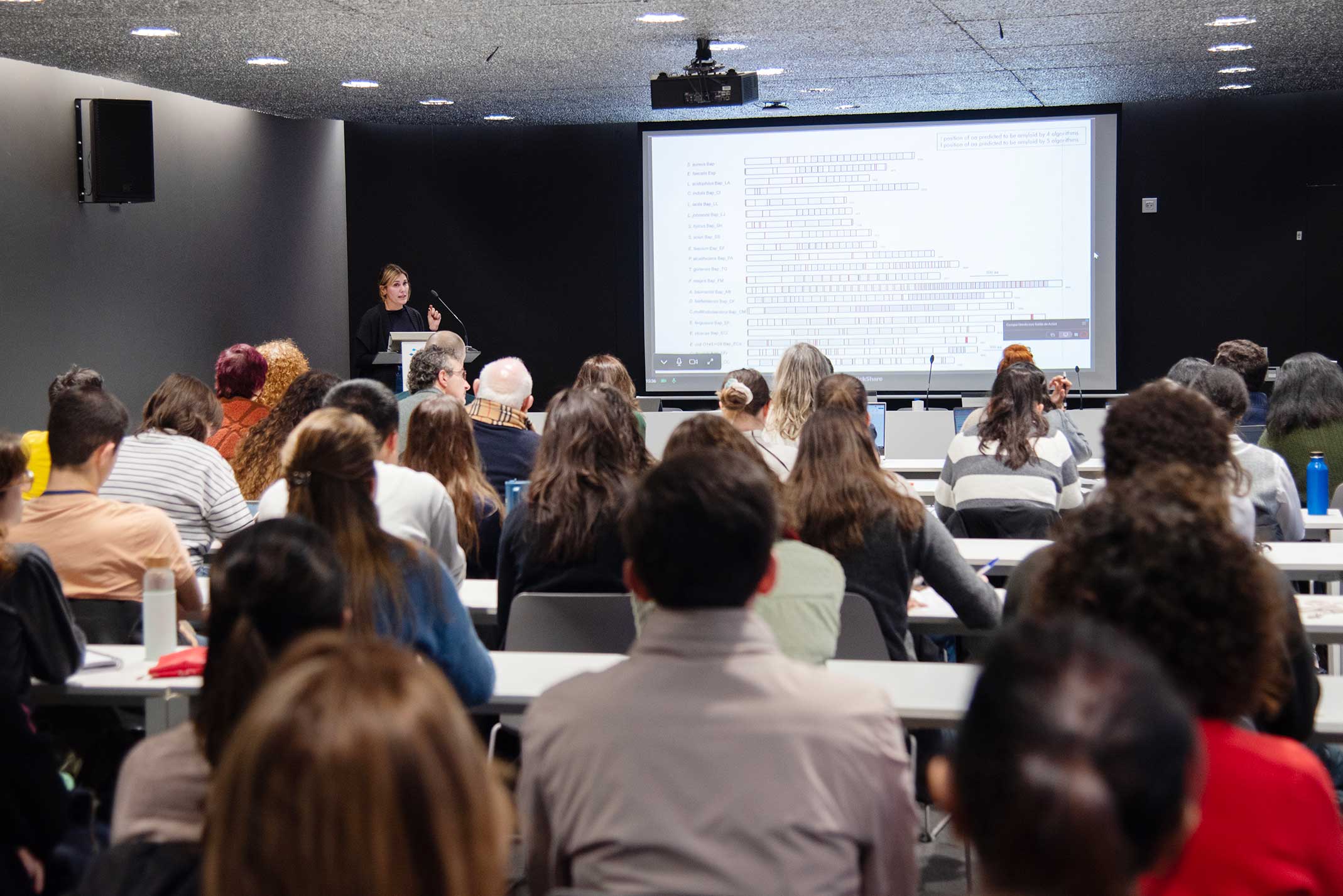
Jaione Valle Turrillas, a CSIC researcher at the Institute of Agrobiotechnology (IdAB-CSIC), opened the event with a presentation on communication between the microbiota and the central nervous system through the gut-brain axis, an interaction pathway currently being studied for its potential influence on processes related to neurological health. “The gut microbiota constitutes one of the densest and most complex microbial communities in the human body,” explained Jaione Valle. She highlighted that several studies have observed that alterations in this microbial community may influence the onset and progression of neurodegenerative diseases such as Alzheimer’s and Parkinson’s disease.
During her presentation, Valle discussed several studies conducted by the Bacterial Communities and Disease Laboratory at IdAB-CSIC, focusing on how certain by-products generated by the gut microbiota may be involved in processes associated with the development of Parkinson’s disease.
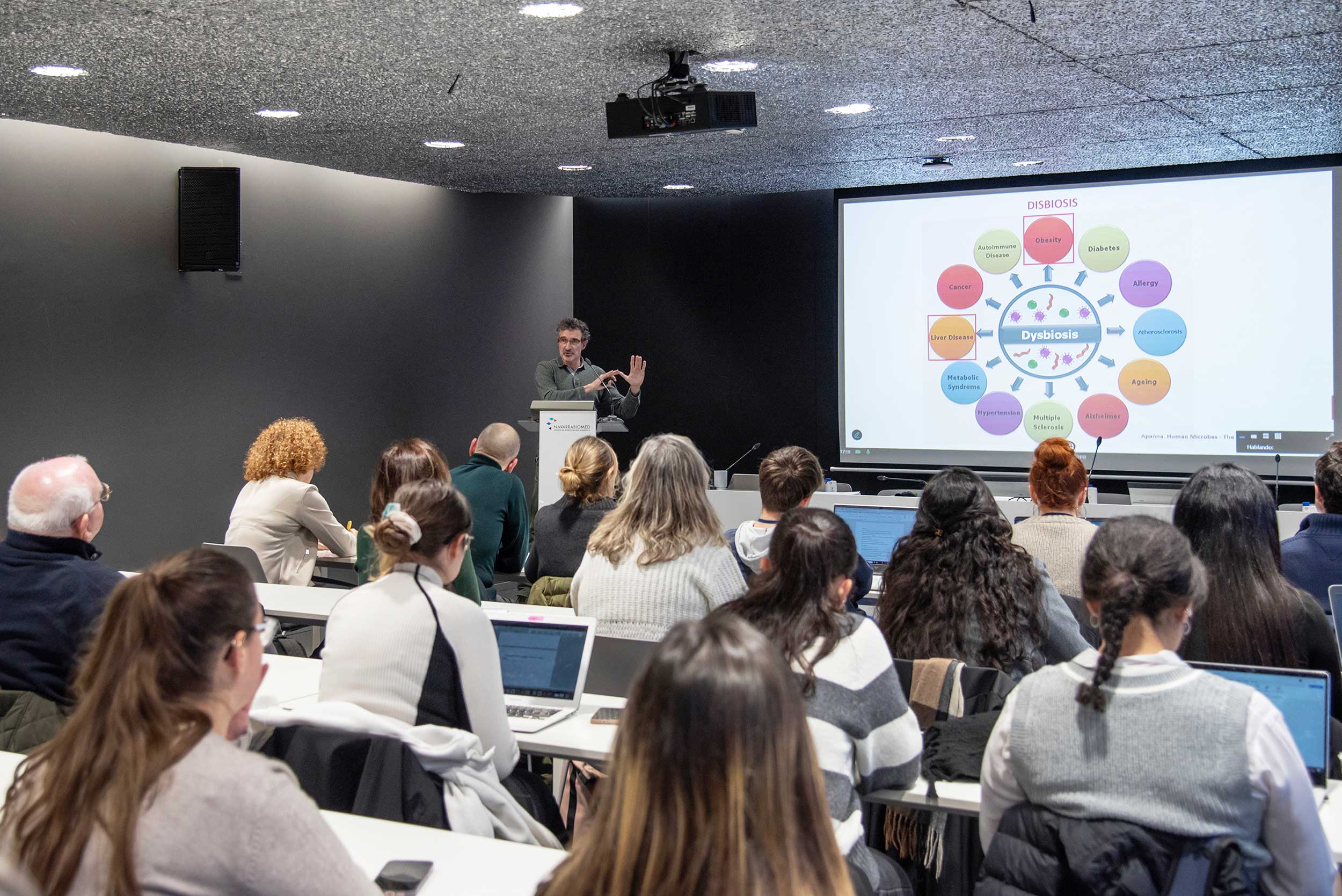
The symposium program also included two additional presentations dedicated to other microbiota-disease connections. Rafael Valdés Mas, a Ramón y Cajal researcher at Cima Universidad de Navarra, addressed the interactions between the host organism, the microbiome, and diet in inflammatory bowel diseases. Fermín Milagro Yoldi, professor at the Nutrition Research Center of the University of Navarra, presented several research lines on probiotics and postbiotics with applications in metabolic diseases.