Visitas

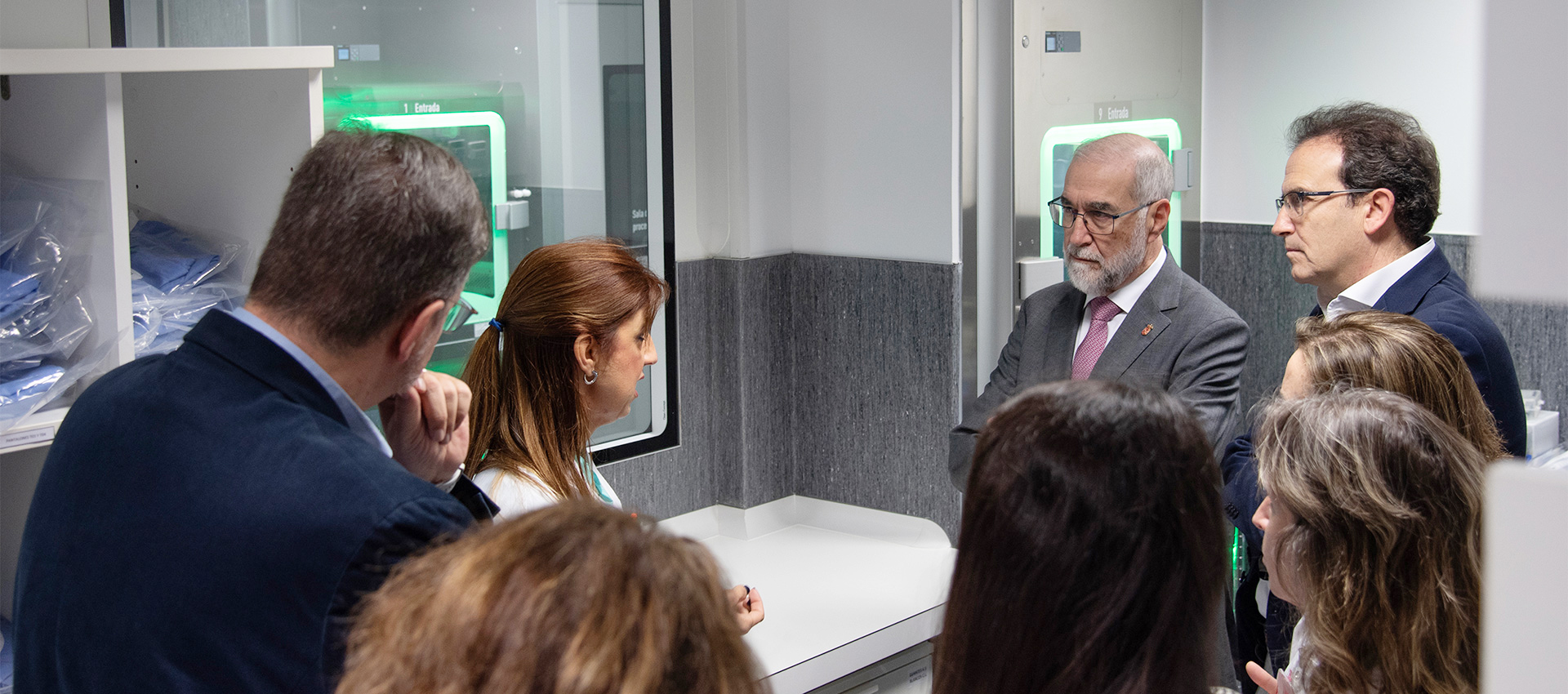
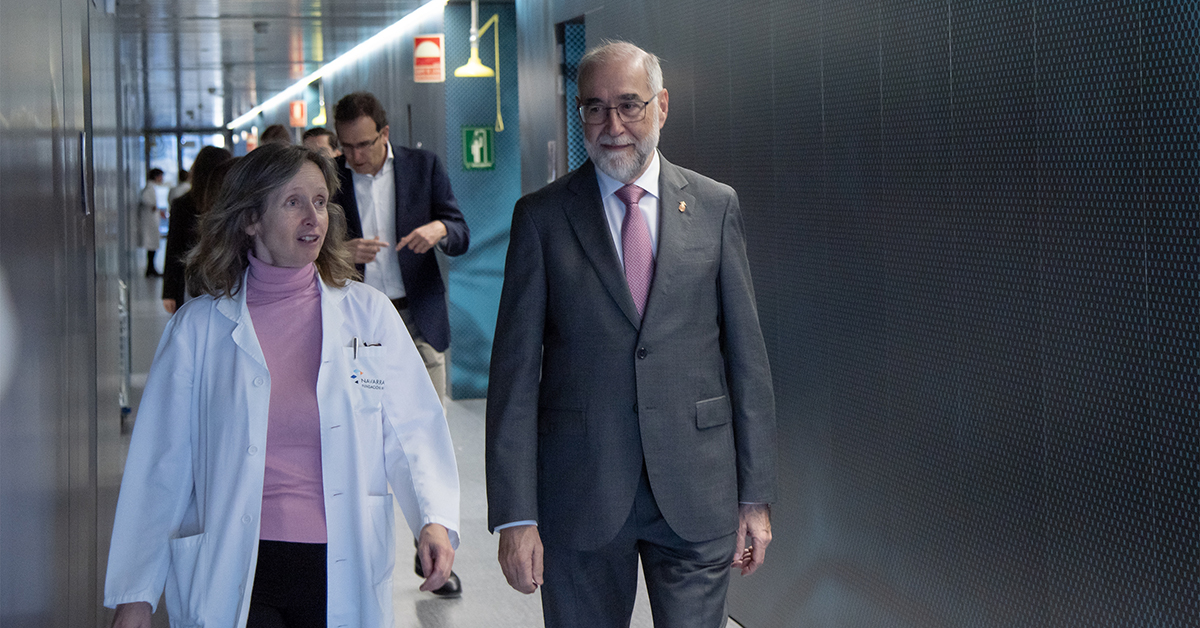
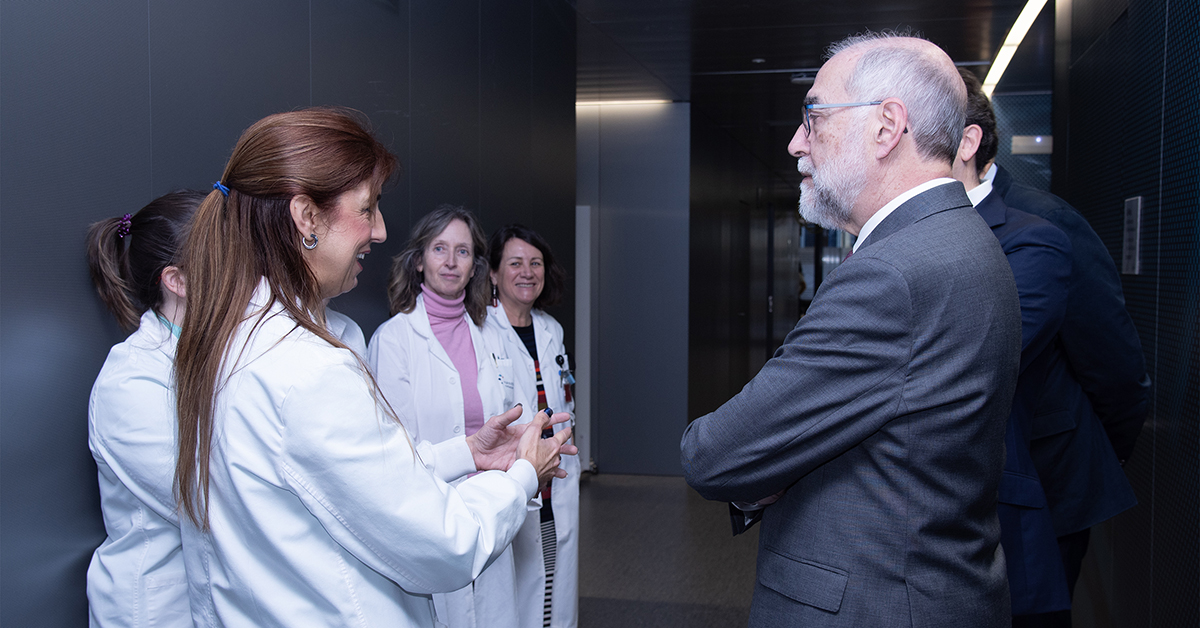
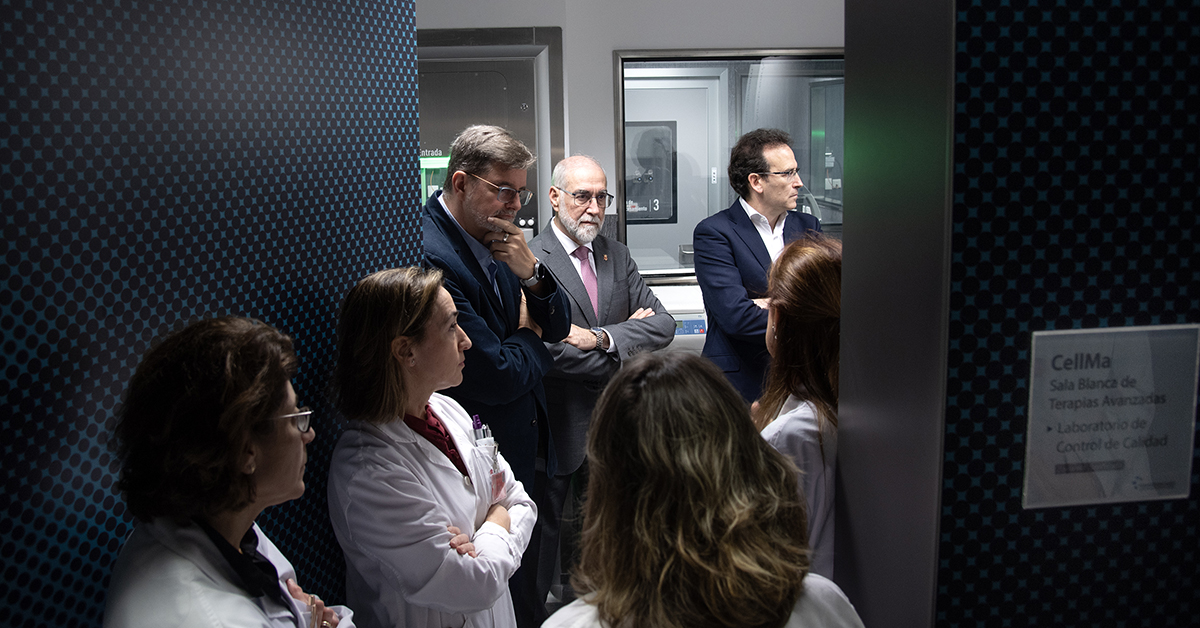
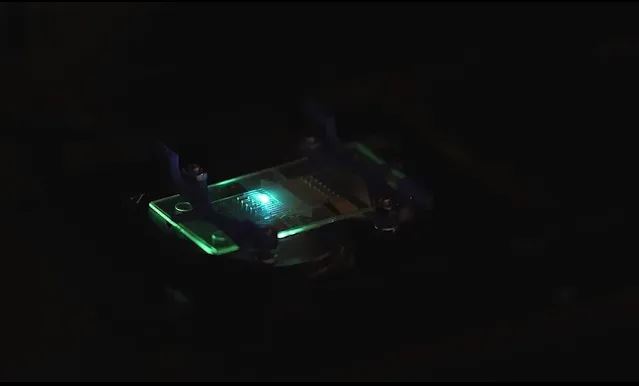
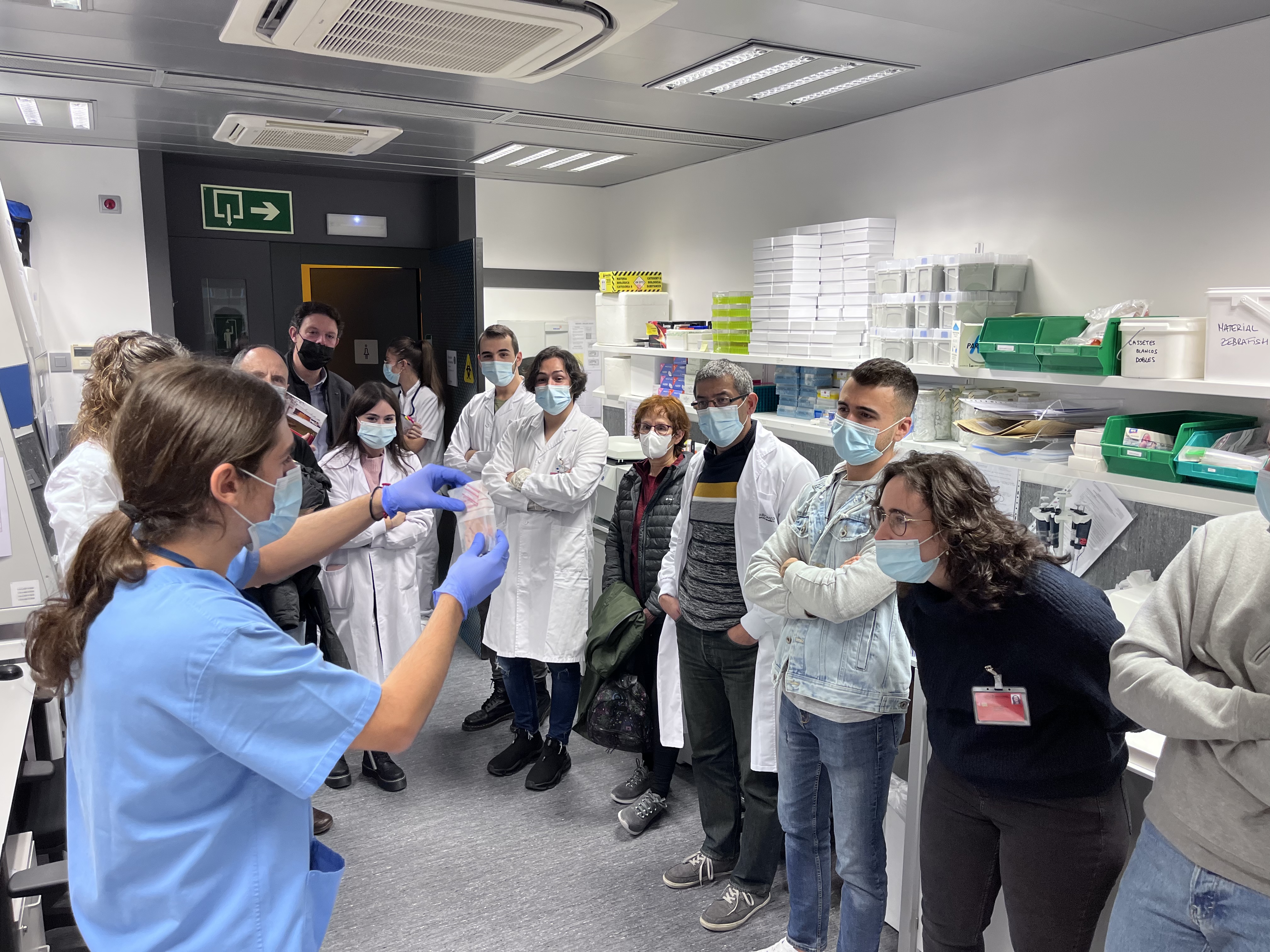
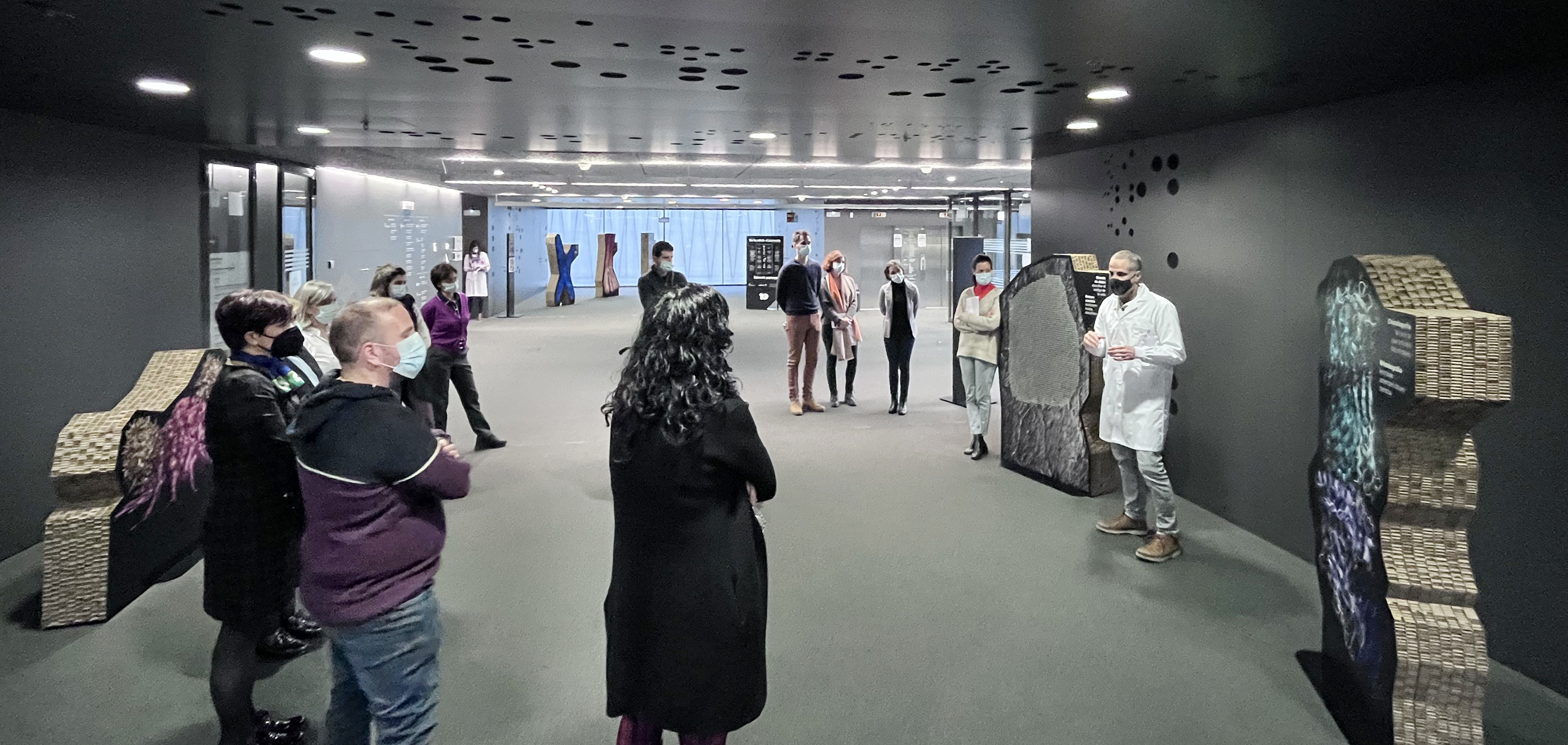
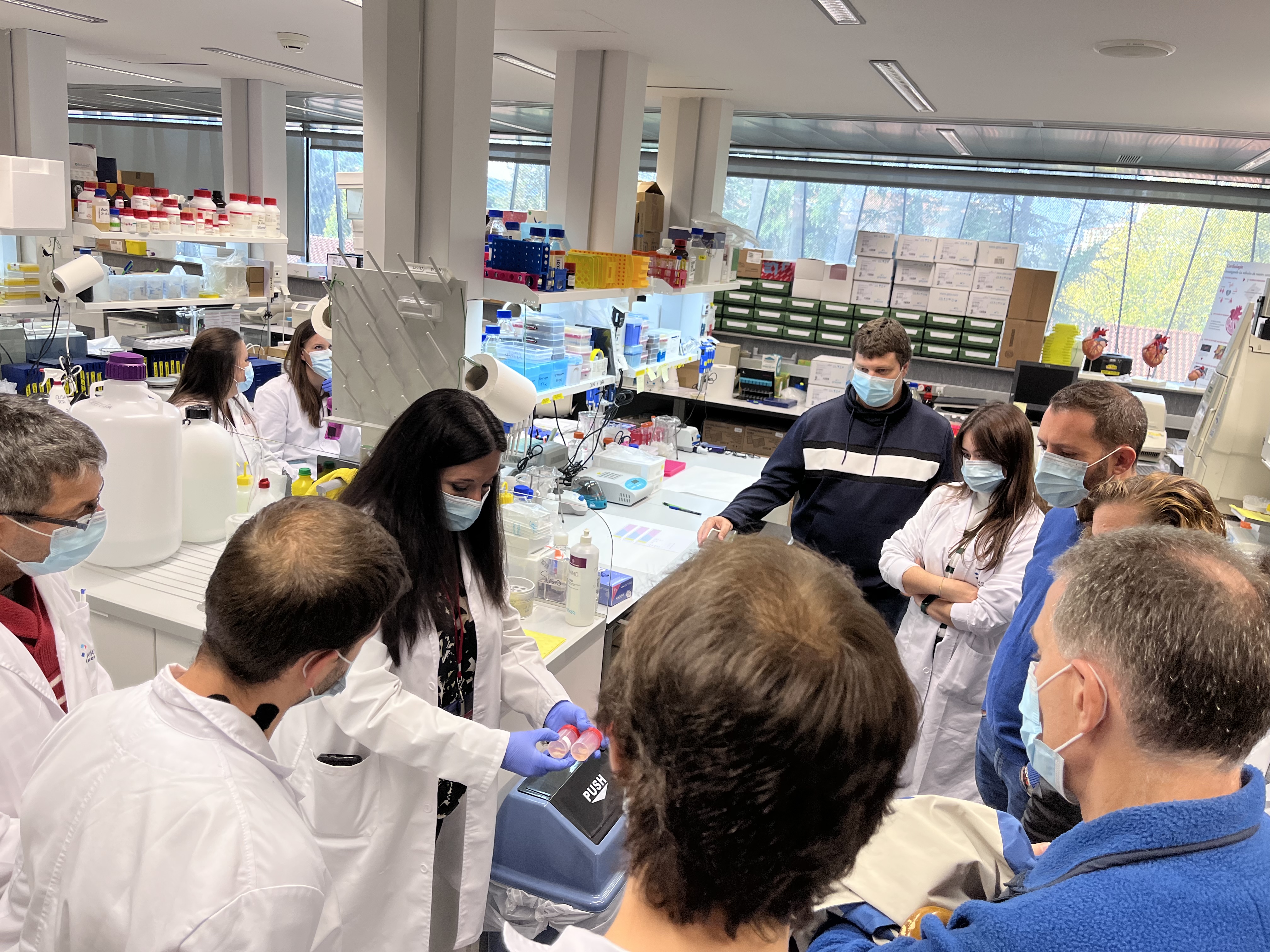
Officials from the Department of Health visit the White Room facilities

Visita representantes de Salud y del HUN a la sala blanca.
Author
Navarrabiomed

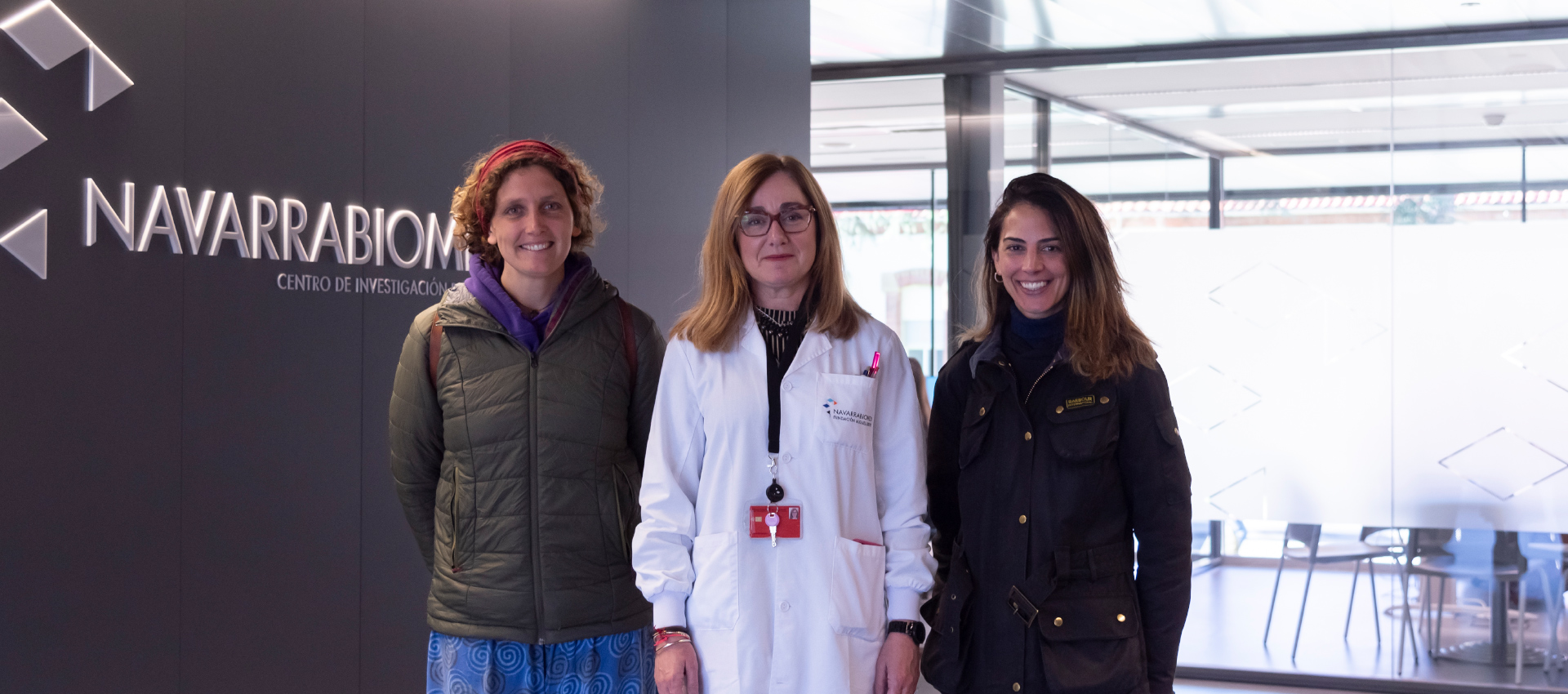
The Regional Minister of Health of the Government of Navarra, Fernando Domínguez, has visited Navarrabiomed to see first-hand the facilities of the CellMa Advanced Therapies White Room, accompanied by the director of the centre, Maite Mendioroz; and the managing director, María Bezunartea.

Also attending with him were the Director General of Health, Antonio López; the Managing Director of the Servicio Navarro de Salud-Osasunbidea, Alfredo Martínez; Estrella Petrina, Managing Director of the Hospital Universitario de Navarra and the head of the Pharmacy Service at the Hospital Universitario de Navarra, Maite Sarobe.

The person in charge of the Clean Room, Natalia Ramírez, and her team, have facilitated the visit to the facilities where the visitors were able to learn about the scope of this new provision for the Servicio Navarro de Salud-Osasunbidea. It is expected to complete its accreditation process, which will allow it to begin manufacturing sterile medications for human use, whose active ingredient is somatic cells (Somatic Cell Therapy), in 2024.
ción de medicamentos estériles destinada a uso humano, cuyo principio activo sean células somáticas (Terapia Celular Somática).

Categoría
Galería de imágenes
Maite Mendioroz recibió al consejero Fernando Domínguez y resto de representantes de Salud.
Download Flecha que indica descarga
Natalia Ramírez informa sobre las dotaciones de la sala blanca.
Download Flecha que indica descarga
Representantes de Salud y del HUN visitan las instalaciones de la sala blanca.
Download Flecha que indica descarga
Documentación
Vídeo

Dr. Ellen Gelpí, a renowned expert in neuropathology, participates in Navarrabiomed in a workshop with professionals from the Biobank and HUN

 Dra. Ellen Gelpí en Navarrabiomed
Author
Navarrabiomed
  • During her visit, Gelpí collaborated with both centrers in the diagnosis of complex clinical cases.

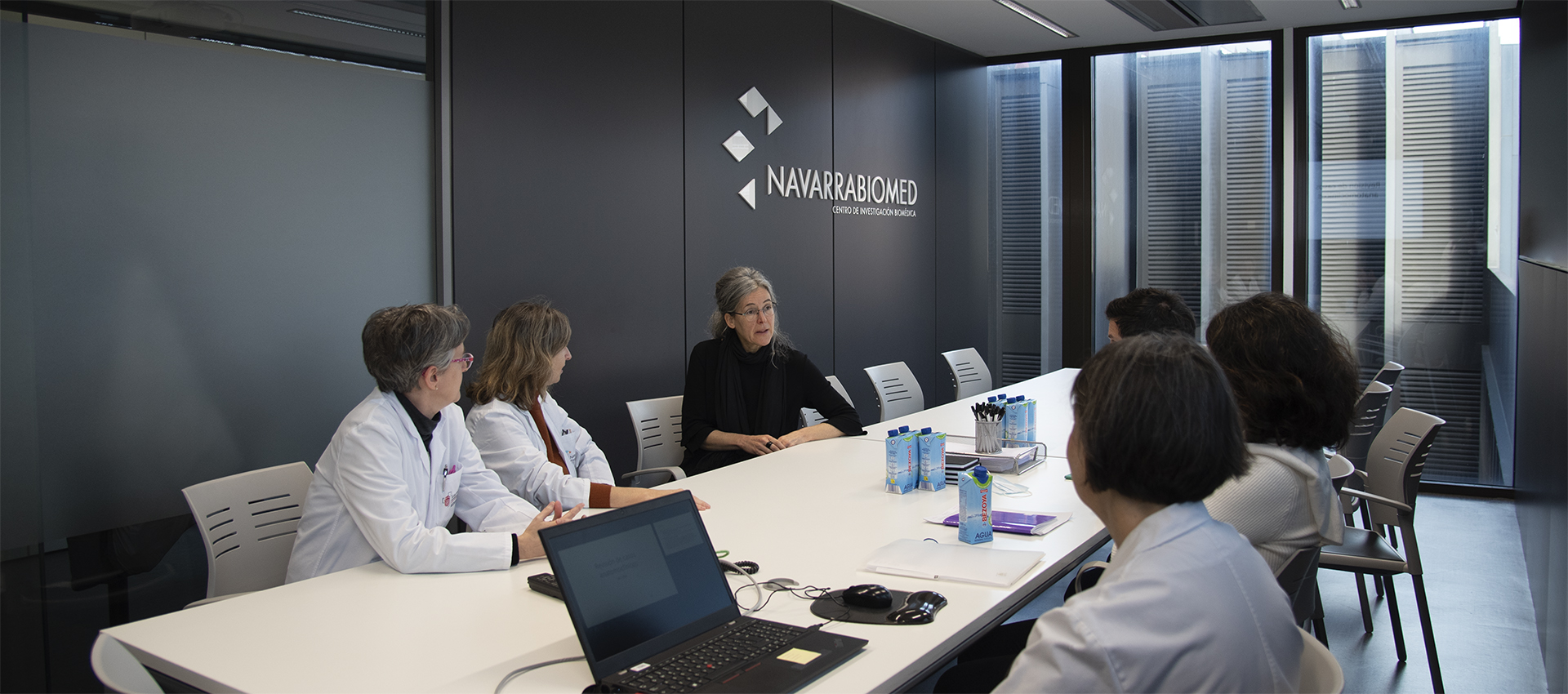
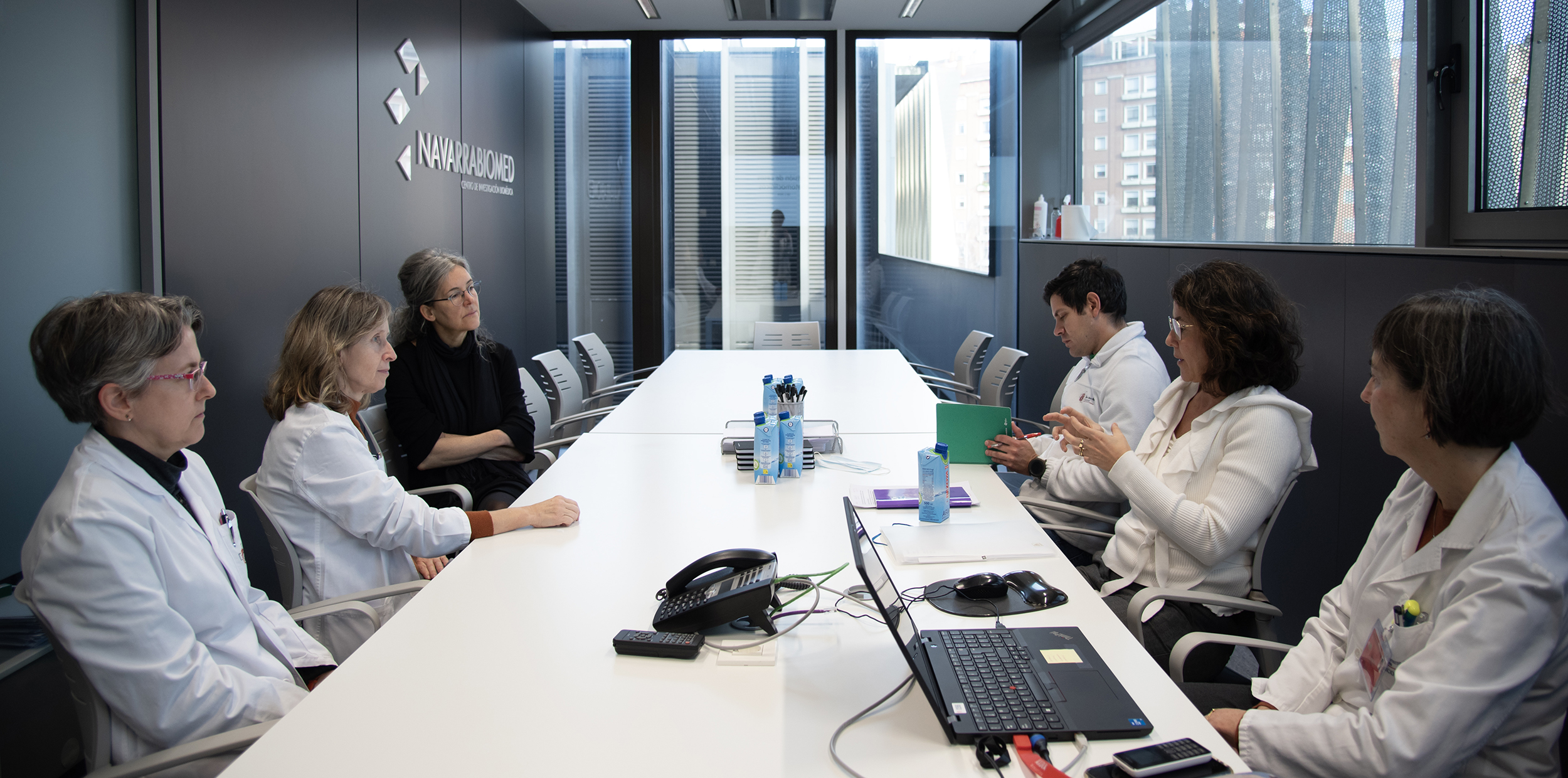
On Thursday 18th January, Navarrabiomed welcomed Dr. Ellen Gelpí, an expert in neuropathology and head of the neurodegenerative diseases area at the Institute of Neuropathology of the Vienna General Hospital. The neurologist and researcher participated together with professionals from HUN and the research centre in a workshop on the neuropathological diagnosis of complex clinical cases involving patients with neurodegenerative diseases who had donated brain tissue to the Navarrabiomed Biobank. 

The workshop was organised by the head of the Neurology Department at HUN, Elena Erro, and the managing director of Navarrabiomed, Maite Mendioroz. Several neurologists from HUN, who presented the clinical evolution of the patients while alive, and pathologists from the Anatomical Pathology department at HUN, who showed their anatomopathological evaluation of the case, also participated. Throughout the workshop, they were able to discuss the diagnoses among all the meeting participants, with advice from Dr. Ellen Gelpí. 

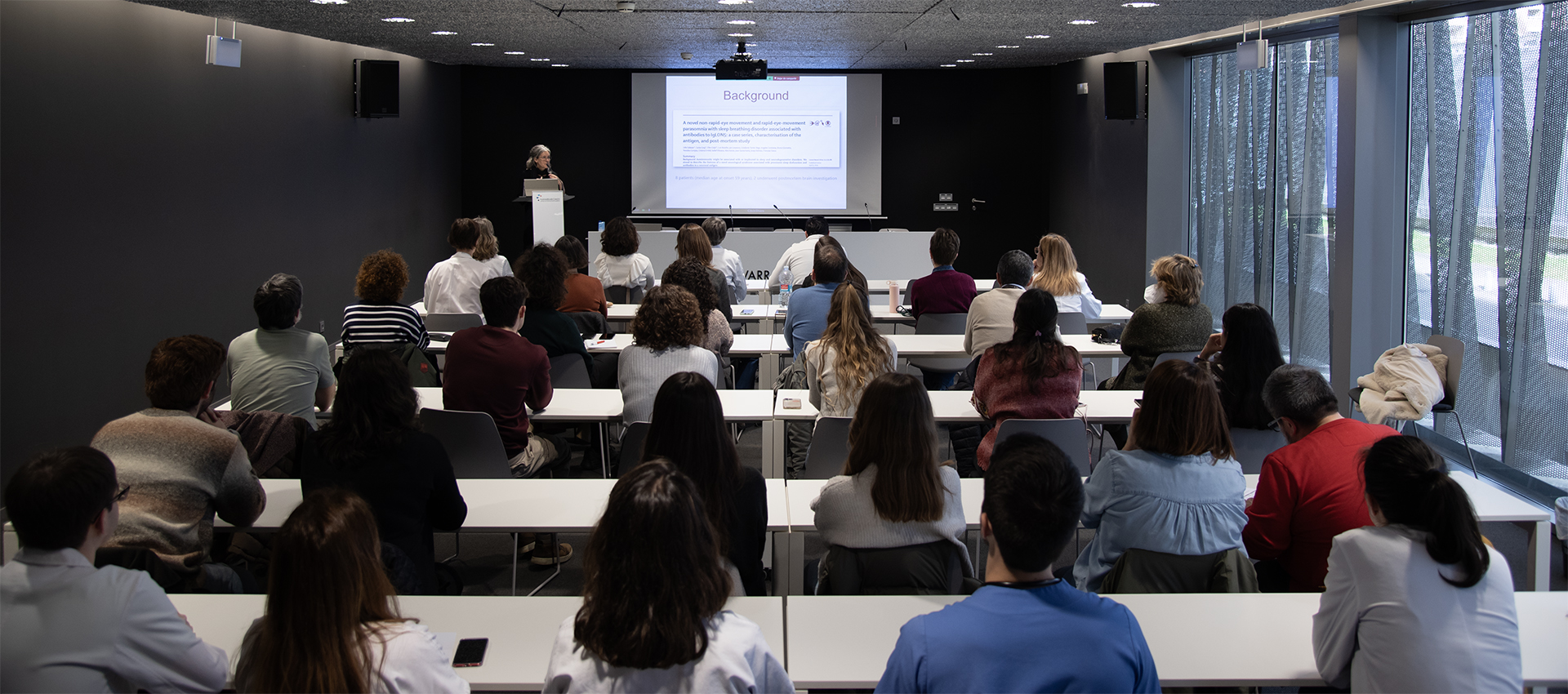
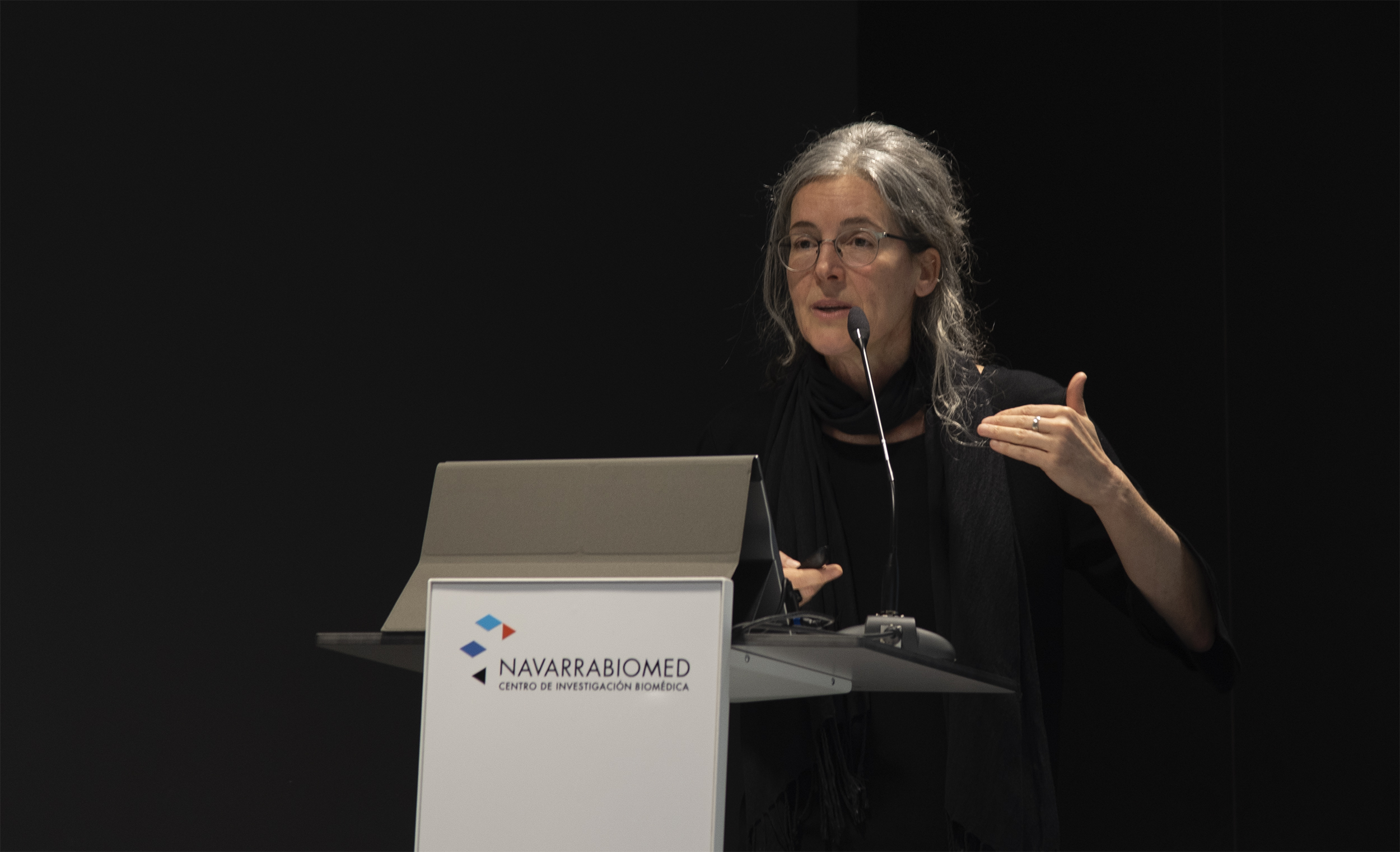
The day was completed with a seminar in the Navarrabiomed conference room: “Neuropathology of anti-IgLON5 disease: a new entity between neuro-inflammation and neuro-degeneration”, an event attended by more than 60 professionals assigned to the Health Research Institute of Navarra (IdISNA).
 

Categoría
Galería de imágenes
Seminario científico impartido a profesionales de centros IdISNA.
Download Flecha que indica descarga
Ellen Gelpí durante su intervención.
Download Flecha que indica descarga
Sesión de trabajo celebrada en Navarrabiomed.
Download Flecha que indica descarga
Documentación
Vídeo

Profesionales del CAIDIS Infanta Elena visitan el Biobanco 

Visita CAIDIS Infanta Elena
Author
Navarrabiomed

El miércoles, 8 de noviembre, visitaron Navarrabiomed Natalia Burgos, neuropsicóloga y psicóloga general sanitaria, e Izaskun Baltanás, médica de familia del Centro de Atención Integral a la Discapacidad Infanta Elena (CAIDIS) para conocer el servicio científico-técnico de Biobanco. La técnica de área del Biobanco, Amaya Lavín, fue la encargada de recibirles y darles a conocer este servicio científico-técnico. 

Las asistentes pudieron conocer las instalaciones del Biobanco, las colecciones de muestras biológicas disponibles y la actividad de investigación que facilitan al trabajar en el marco de la red nacional Plataforma ISCIII Biomodelos y Biobancos, que a su vez conecta con otras plataformas internacionales. 

Durante la visita también pudieron conocer los detalles del proceso de donación de tejido neurológico y los consentimientos asociados y/o testamentos vitales que se necesitan tramitar en vida, así como las indicaciones que deben figurar para poder realizar estas donaciones post-mortem. 

Tras este primer contacto, se ha previsto que en febrero de 2024 Amaya Lavín acuda al CAIDIS Infanta Elena para ofrecer dos sesiones sobre donación de tejido neurológico, una dirigida a las personas usuarias y otra a sus familiares. 
 

Categoría
Documentación

Development subsidizes a strategic R&D project to develop a biomedical device for the treatment of neurodegenerative diseases

El consejero de Desarrollo Económico y Empresarial, Mikel Irujo, y la directora general de Industria
Author
Gobierno de Navarra
  • The 3D3B-AVATAR project will allow the ability of new drugs to cross the blood-brain barrier and reach the human brain to be tested.


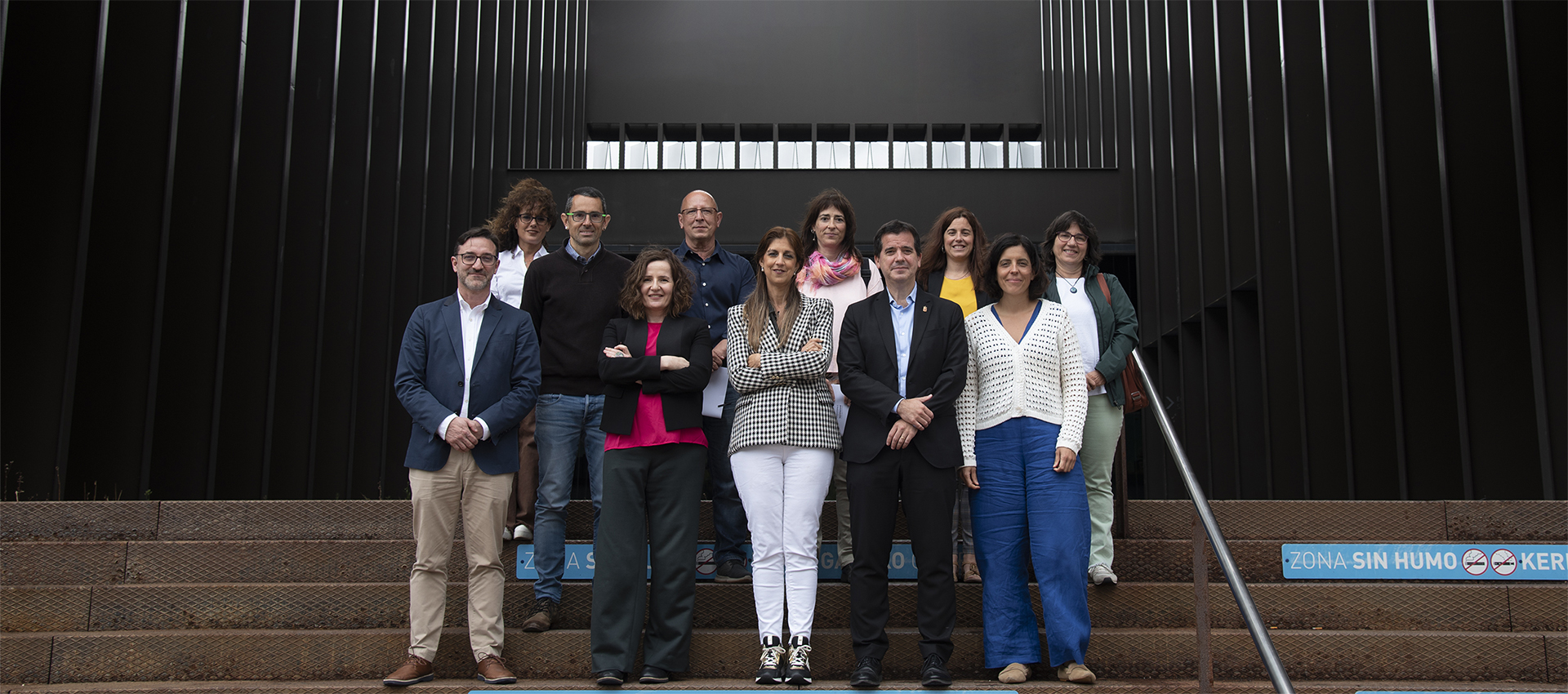
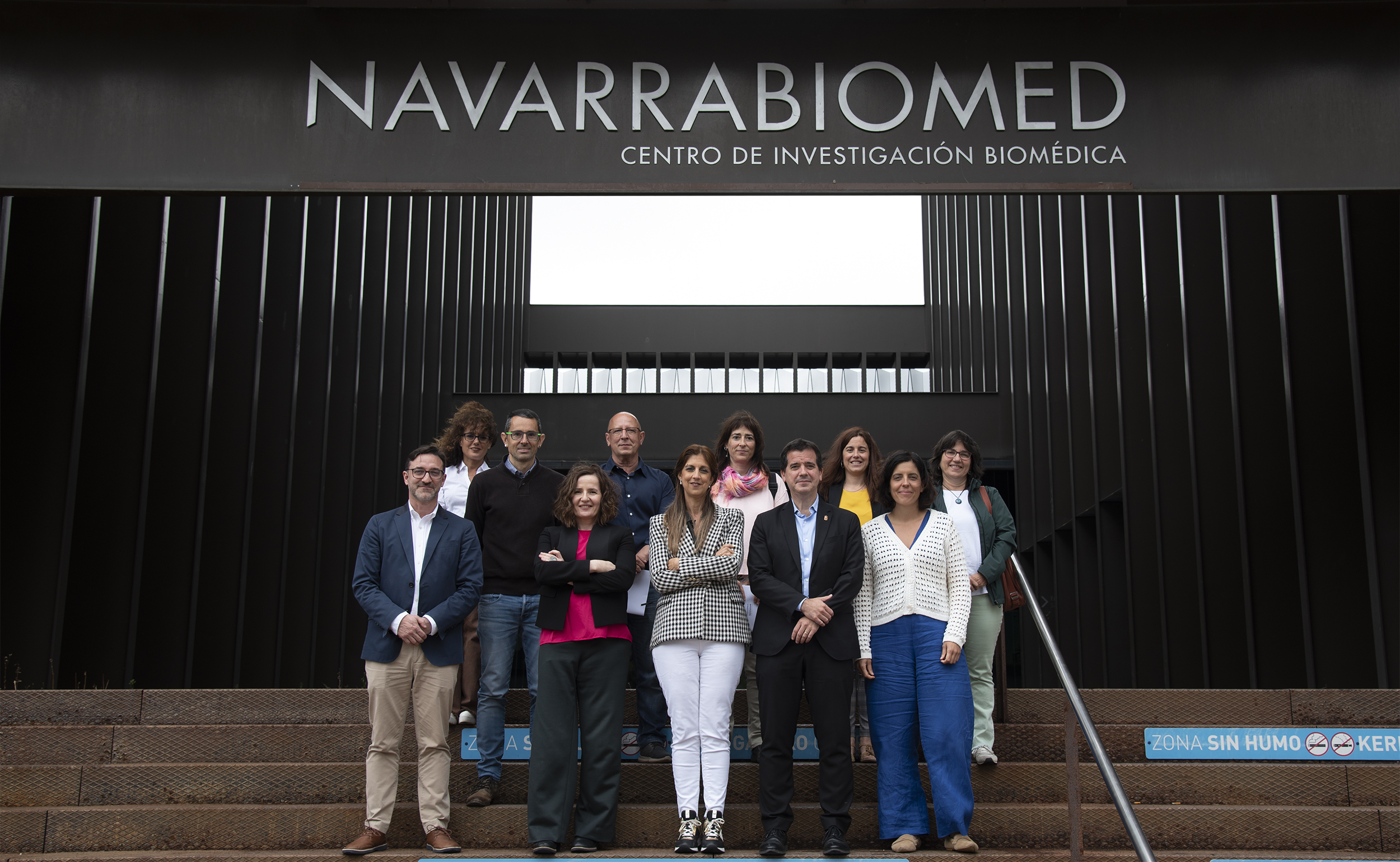
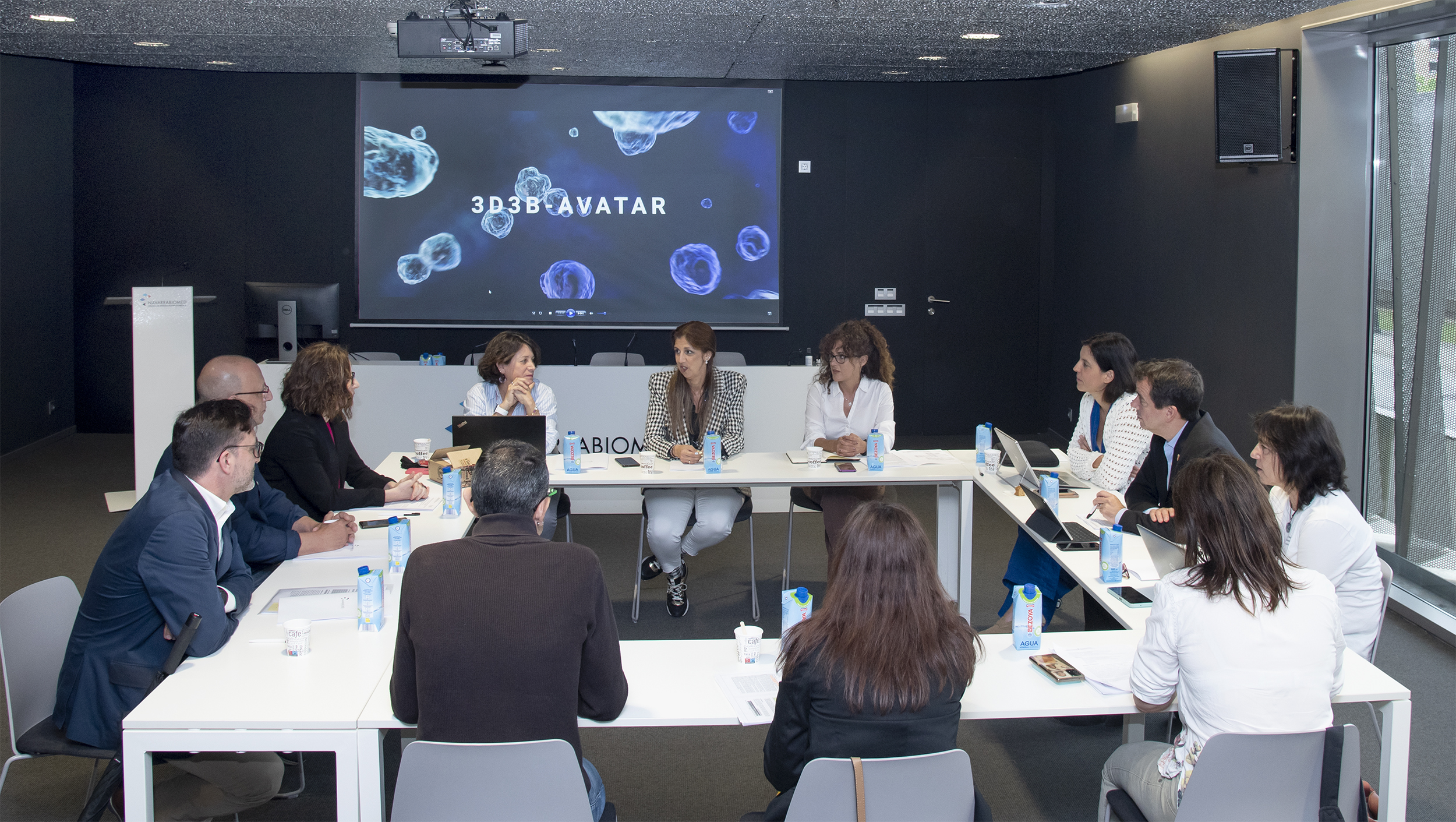
The Department of Economic and Business Development, through the Call for Strategic R&D Project Grants, has funded the 3D3B-AVATAR project, which has successfully designed and printed microscopic 3D structures that mimic the functional barrier of the human brain using biocompatible inks. This means that the structure, composition, and functionality of these printed synthetic structures are similar to the biological barrier existing in human brains.

Specifically, the part that has been successfully recreated is the blood-brain barrier, a microscopic structure that protects the brain. It functions like a filter, allowing the entry of substances such as oxygen, water, and glucose, while preventing the entry of other external agents such as bacteria and certain drugs.

To treat neurodegenerative diseases, such as Alzheimer’s, it is necessary for drugs to be able to penetrate the blood-brain barrier and reach the human brain tissue. The objective of the 3D3B-AVATAR project has been to achieve an artificial model of this barrier using 3D printing techniques, the development of bioinks, and fluid dynamics studies. This will allow the ability of new drugs under development to penetrate the barrier and reach the brain to be tested in the laboratory.

3D3B-AVATAR has been developed by a consortium led by Navarrabiomed, which has also involved the Public University of Navarra (UPNA), the Center for Applied Medical Research (CIMA), NAITEC, and additive manufacturing companies Iruña Tecnologías, Hirudi 3D Intelligence, and One Voxel.


Development of the project

In order to achieve the goal of printing synthetic microscopic structures that mimic the blood-brain barrier of a human brain artificially, the consortium of this project has first conducted specific processing and study of brain tissue from healthy donors and patients with Alzheimer’s disease. Once the microscopic vascular structures of these tissues had been characterized from a fluid-dynamics perspective and the imaging analysis had been completed, different geometric models were designed to recreate the basic structure of the blood-brain barrier.

To complete this functional microscopic human structure, bioprinting bio-inks have been developed. With these materials and fluid-dynamic patterns, a functional basic device has been 3D printed using biocompatible inks and biological components that mimic the blood-brain barrier of a healthy individual.


The call for proposals

The grants for Strategic R&D Projects stem from an annual call for proposals made by the Department of Economic and Business Development through the Directorate General of Industry, Energy, and Strategic Projects S4. The 3D3B-AVATAR project was approved in the 2020 call and has just concluded. The project had a total budget of €1,236,300.

This call for grants aims to promote the implementation of high-impact projects that are aligned with the sectors identified in Navarra’s Smart Specialization Strategy (S4). Specifically, seven challenges related to electric vehicles, renewable energy, advanced medicine, food, artificial intelligence, biotechnology, and innovative ideas are identified. The 3D3B-AVATAR project falls under this latter category.

The call for R&D strategic projects for 2023-2026 is currently in the evaluation process. One of the main novelties of this edition is the inclusion of an eighth challenge related to the circular economy.


Categoría
Galería de imágenes
Documentación
Vídeo
El reto de 3D3B-AVATAR
Natalia
Ramírez Huerto
Head of the Unit

Cerca de 300 personas visitan Navarrabiomed con motivo del 10º Aniversario y las Semanas de la Ciencia

Personas en una visita a Navarrabiomed
Author
Navarrabiomed

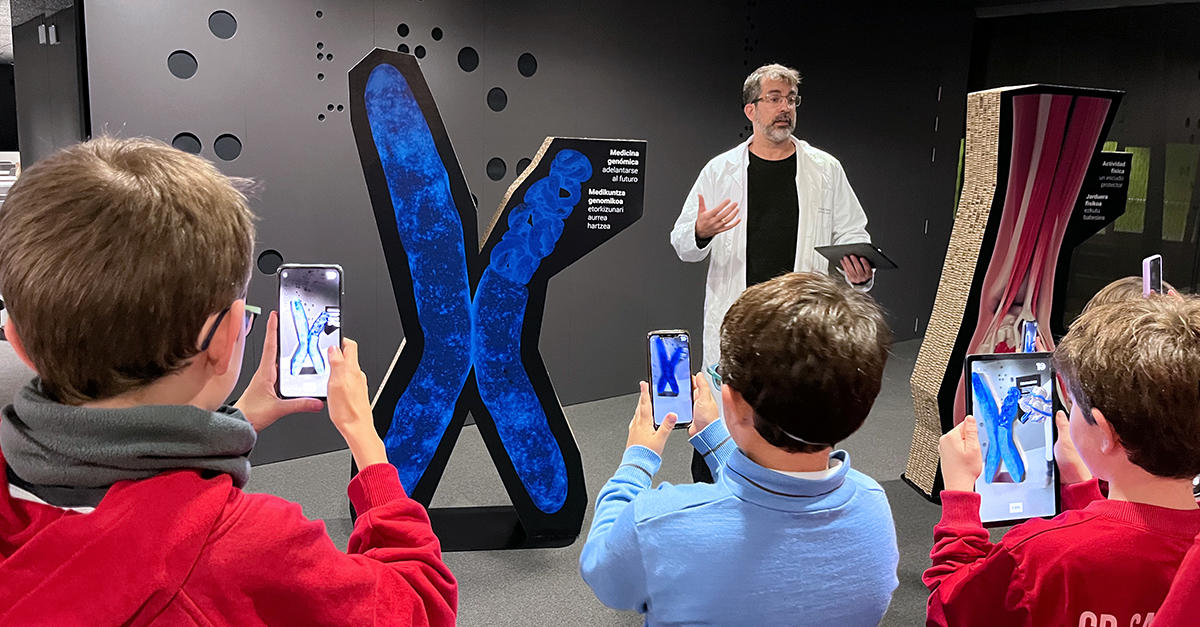
•    Los y las asistentes mostraron un gran interés por la exposición interactiva con realidad aumentada. 


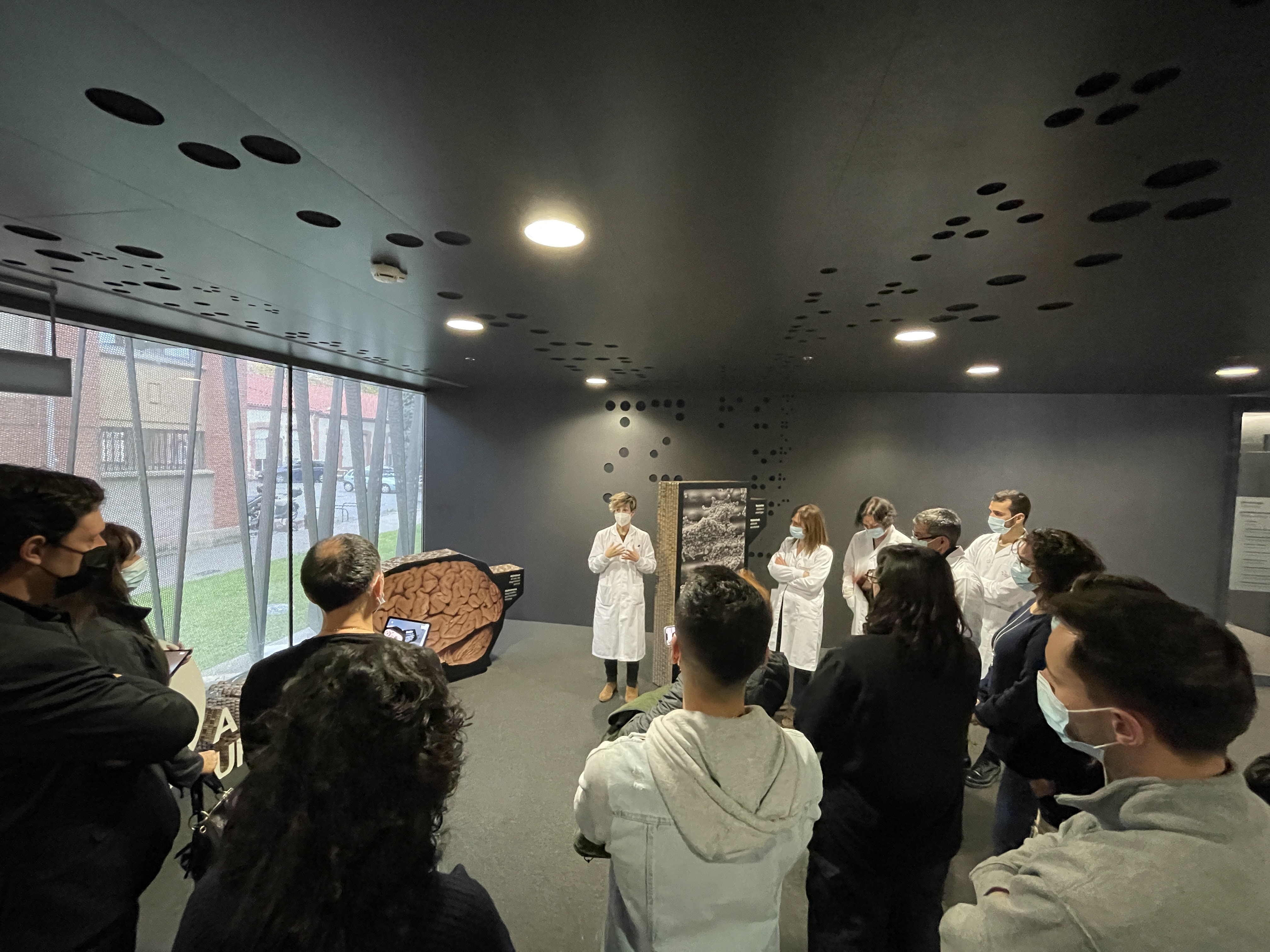
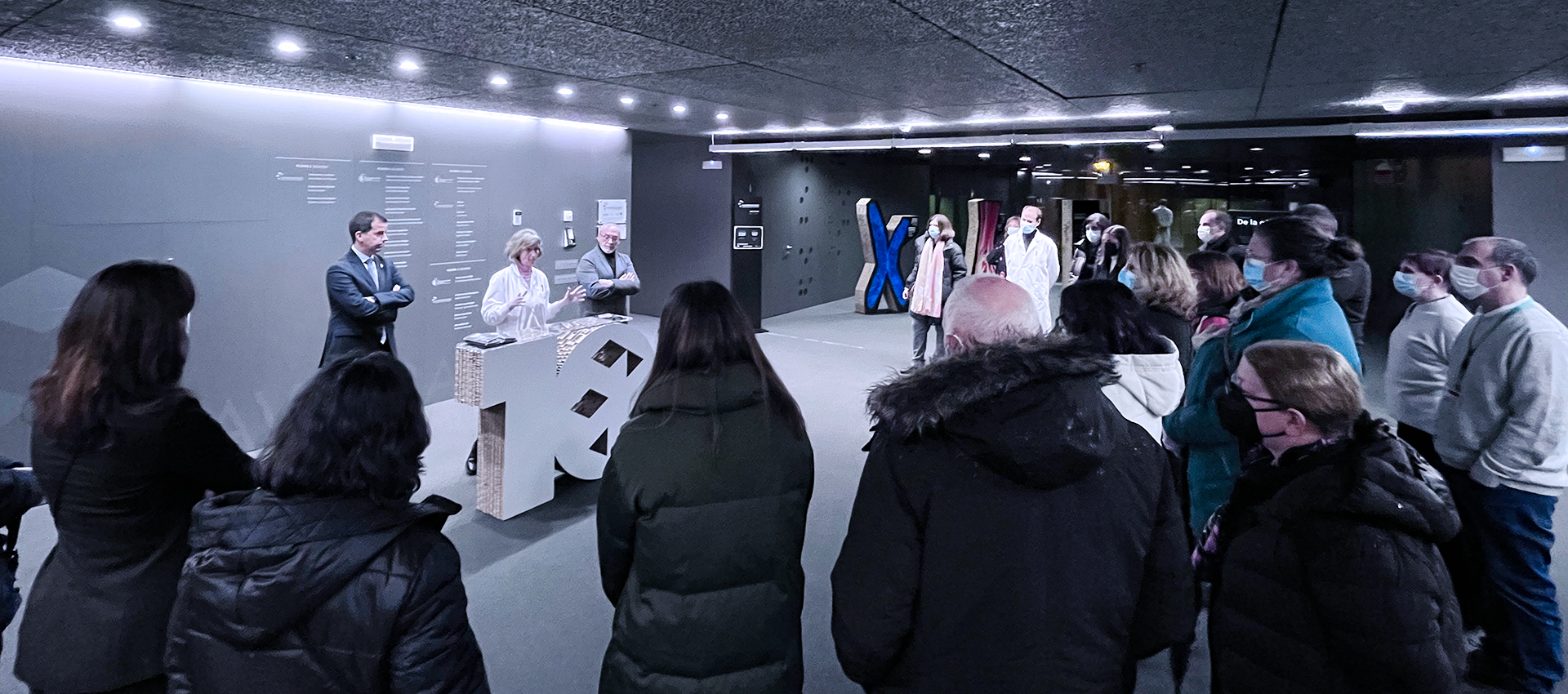
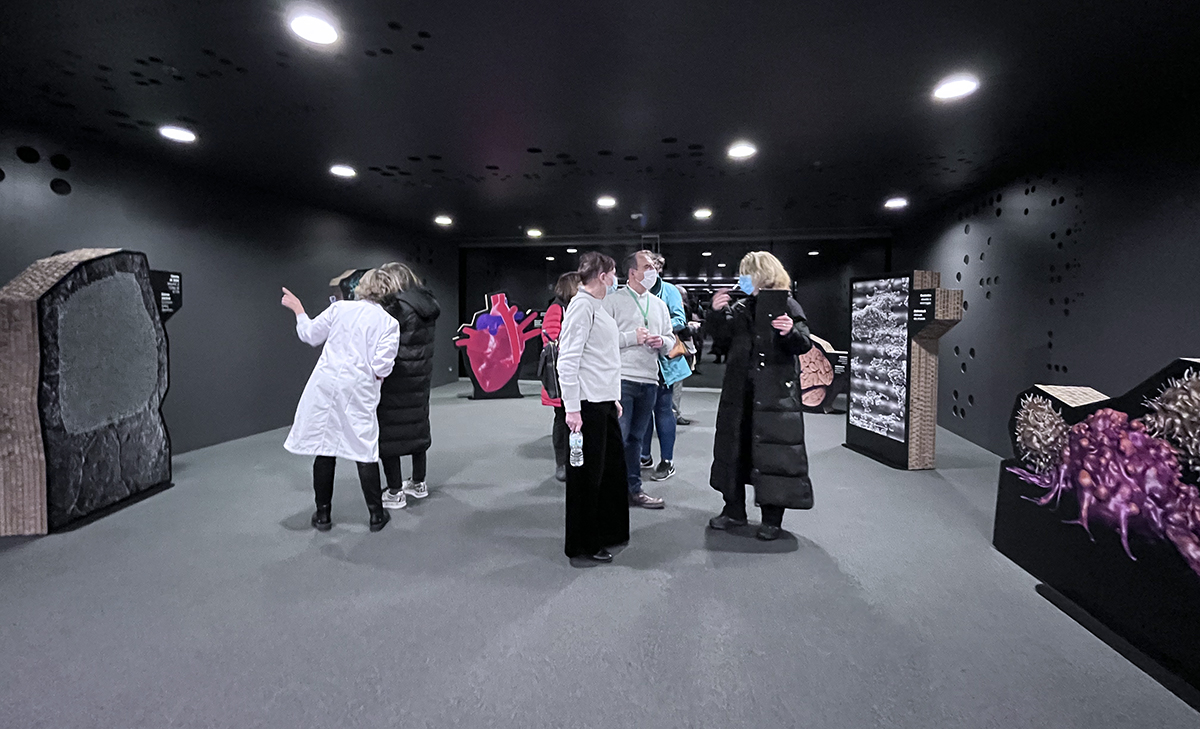
La investigación tiene una repercusión directa en la medicina, ya que los avances en la práctica médica pueden ofrecer mejoras extraordinarias en el tratamiento, prevención y diagnóstico de enfermedades. Es lo que han podido comprobar decenas de apasionados por la ciencia al visitar el centro de investigación Navarrabiomed y la exposición interactiva "De la célula al paciente. 10 Años avanzando juntos / Zelulatik pazientera. 10 urte elkarrekin lanean". Durante las Semanas de la ciencia y en el marco de los actos de celebración de su 10º Aniversario, Navarrabiomed les abrió sus puertas y, con esta experiencia, les trasladó su misión y objetivo: convertir la investigación en resultados tangibles beneficiosos para la ciudadanía y el sistema público de salud en su conjunto. 

Asimismo, se organizaron tres jornadas temáticas de puertas abiertas en la que investigadores del centro mostraron a los visitantes la exposición y, posteriormente, las instalaciones de su laboratorio. La primera de las jornadas llevaba por título: "Medicina de precisión: del ADN a la inmunoterapia” y en ella participaron las investigadoras María Apellániz de la Unidad de Medicina Genómica y Luisa Chocarro de la Unidad de OncoInmunología. La segunda sesión programada fue la de “Enfermedades del corazón, ejercicio físico y salud”, a cargo de Natalia López, investigadora principal de la Unidad de Cardiología Traslacional y de Mikel Izquierdo, investigador principal de la Unidad de Ejercicio Físico, Salud y Calidad de Vida (E-FIT). 

Por último, en la sesión “Desafíos de la investigación en neurociencias", los y las asistentes fueron guiados por Enrique Santamaría, investigador principal de la Unidad de Neuroproteómica clínica y Idoia Blanco, investigadora de la Unidad de Neuroepigenética. En su este caso los asistentes pudieron conocer la actividad del Biobanco.

Además de estas jornadas de puertas abiertas, también se organizó una visita para representantes de la Asociación de Fundaciones de Navarra con el fin de que conocieran la trayectoria de la Fundación Miguel Servet, órgano que gestiona la actividad del centro de investigación biomédica Navarrabiomed desde su creación. 

También para los y las más jóvenes

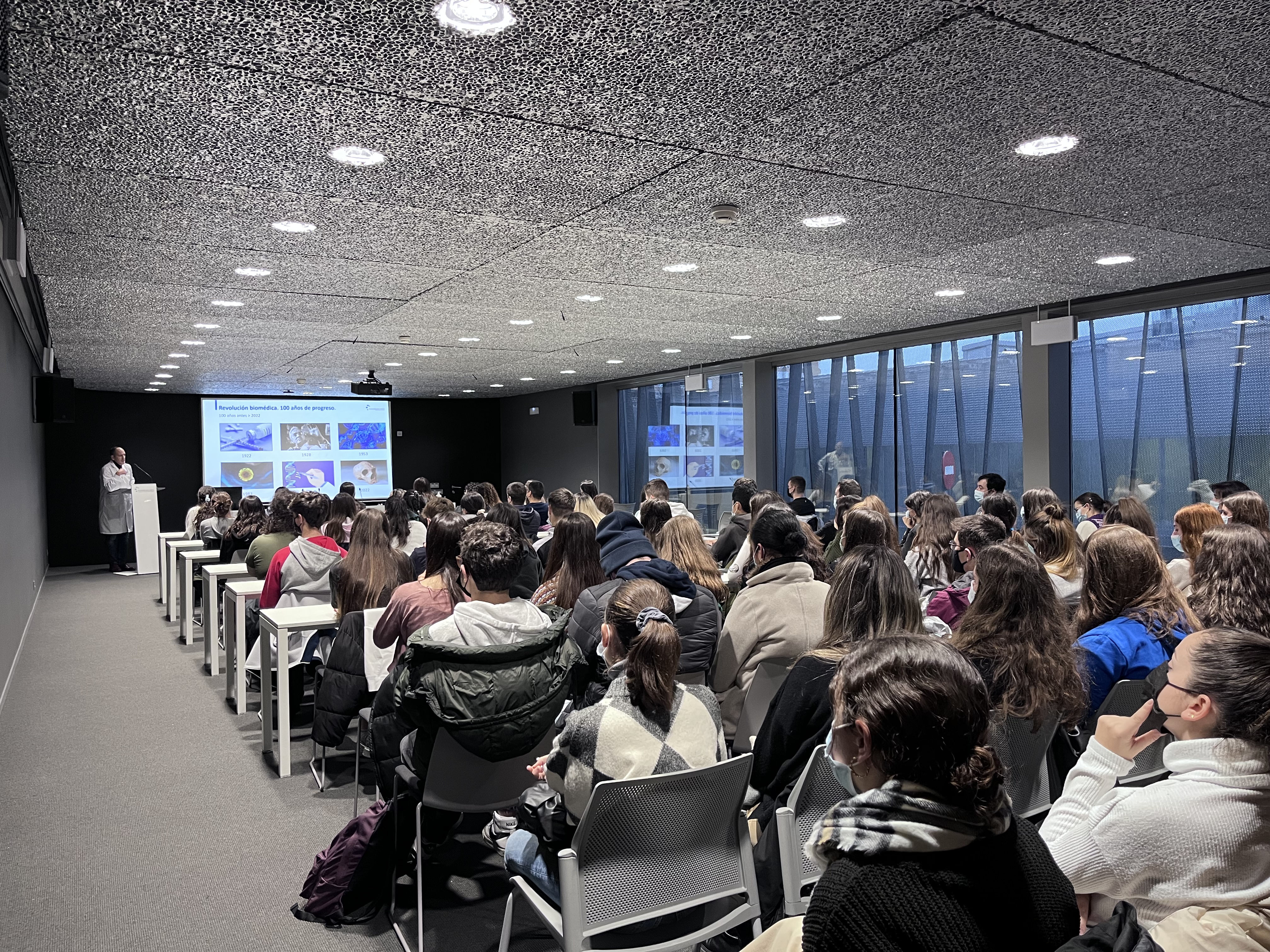
Conscientes de la importancia de fomentar la divulgación científica en el ámbito sanitario, Navarrabiomed ofreció también una sesión sobre salidas profesionales en investigación biomédica a estudiantes de Bachillerato, Formación Profesional y primeros cursos de grados universitarios de la mano de Iñigo Lasa, investigador principal de la Unidad de Investigación en Patogénesis Microbiana. Tras su ponencia y posterior coloquio, los y las asistentes tuvieron opción de visitar los laboratorios de Patogénesis Microbiana OncoInmunología, Señalización en Cáncer, Medicina Genómica, Cristalografía de Proteínas e inmunología estructural (Jacinto López) y Oncología Médica Traslacional. Los y las estudiantes mostraron gran interés por la variedad de técnicas realizadas, así como por la organización interna y las actividades diarias que realiza el personal (técnicos/as, predocs, postdocs, etc.) para llevar al día los proyectos en curso. Además, parte del grupo demandó consejos prácticos y recomendaciones para aquellos que quieren formarse para dedicarse en un futuro a la investigación. 

Coincidiendo con la celebración de Euskaraldia para fomentar el uso del euskara mediante el cambio de nuestros hábitos lingüísticos, esta actividad también se ofreció en euskera al alumnado del modelo D de la mano de la investigadora Ibone Labiano.

Por último, un grupo de "pequecientíficos", familiares y amigos del equipo de Navarrabiomed también se acercaron a conocer el centro. Imanol Arozarena, investigador principal de la Unidad de Señalización en cáncer, fue el encargado de mostrarles la exposición del 10º Aniversario y Ana Purroy y Lupe Gutiérrez impartieron un taller sobre neurociencias en el que explicaron a los niños y niñas la actividad del Biobanco.

Categoría
Galería de imágenes
Jacinto López muestra la exposición durante una de las jornadas de puertas abiertas.
Download Flecha que indica descarga
Natalia López enseña una válvula cardiaca dañada a los y las asistentes.
Download Flecha que indica descarga
Idoia Blanco explicando la exposición del 10º Aniversario.
Download Flecha que indica descarga
María Apellániz recibió a uno de los grupos de estudiantes.
Download Flecha que indica descarga
Iñigo Lasa da conocer a estudiantes los pasos necesarios para dedicarse a la investigación
Download Flecha que indica descarga
Imanol Arozarena mostró la exposición a los niños y niñas que visitaron el centro.
Download Flecha que indica descarga
Documentación
Vídeo

Navarrabiomed introduces itself to the participants of the ICPerMed Workshop

ICPerMed en la visita a Navarrabiomed
Author
Navarrabiomed

Participants of the Workshop ICPerMed (Pamplona, January the 17th and 18th) accompanied by a delegation of the Government of Navarre composed of the regional ministers Mikel Irujo and Juan Cruz Cigudosa, and the directors general Uxue Itoiz and Agurtzane Martinez,  visit Navarrabiomed to learn about the work and infrastructures of the Research Center that leads the Navarre Genomic Medicine Strategy of the regional public health system


After the welcome of the director of the center, Maite Mendioroz, the participants saw the exhibition "From the cell to the patient. 10 Years advancing together". They have also made a visit to the personalized medicine laboratory, guided by Angel Alonso, Head of the Unit of Genomic Medicine of Navarrabiomed and director of the NAGEN program that aims to implant genome analysis in the clinical practice of the Navarro Health Service-Osasunbidea.


Categoría
Galería de imágenes
Visit to the exhibition
Download Flecha que indica descarga
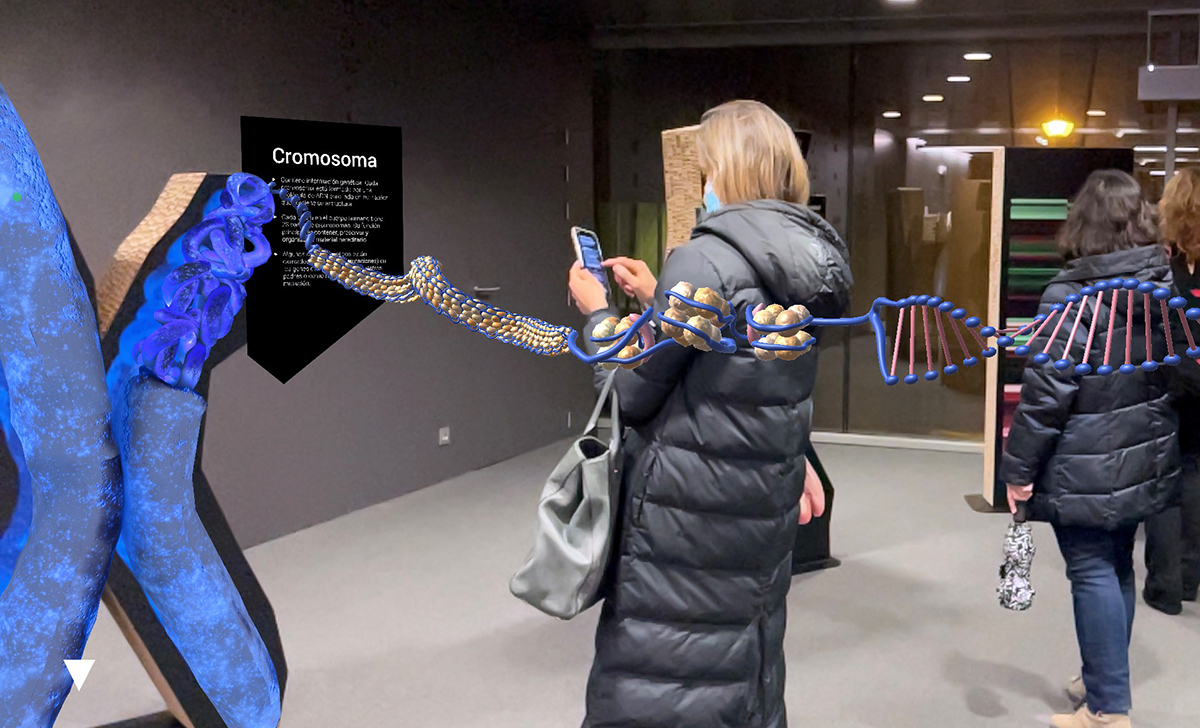
In the exhibition with the piece "Cromosomo"
Download Flecha que indica descarga
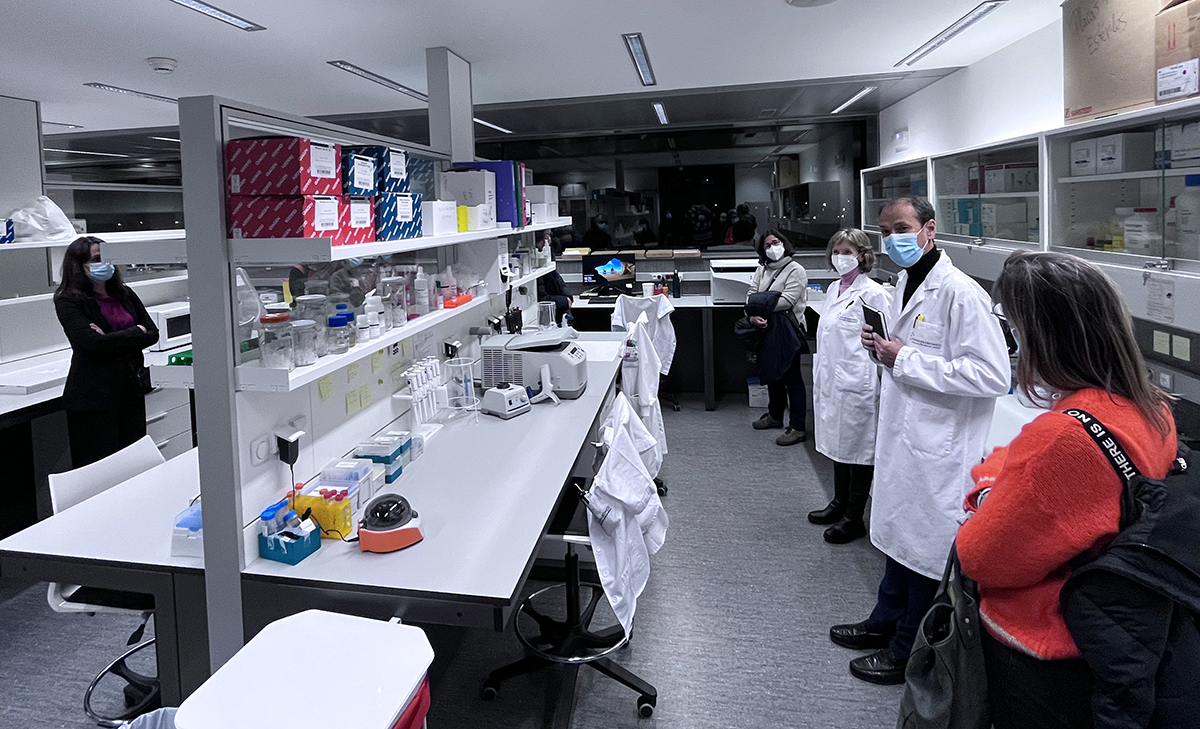
In the Genomic Medicine Laboratory
Download Flecha que indica descarga
Documentación
Vídeo

El consorcio INNOLFACT presenta los avances del proyecto al Gobierno de Navarra

consorcio INNOLFACT
Author
Navarrabiomed

Los socios de INNOLFACT se reunieron, el pasado miércoles 5 de octubre, en Navarrabiomed, para realizar el seguimiento formal del proyecto ante el Gobierno de Navarra, financiador del mismo. Durante el encuentro se expusieron los avances realizados en los últimos meses y las próximas acciones a desarrollar antes del cierre del proyecto previsto para 2023. Asimismo, la reunión también puso el foco en el análisis y visionado de todos los datos obtenidos tanto a nivel inmunológico, cognitivo y olfativo de las cohortes de pacientes analizadas hasta el momento. 


INNOLFACT está liderado por Navarrabiomed y se ha desarrollado gracias a la convocatoria de Ayudas de proyectos estratégicos de I+D 2020-2022 del Ejecutivo foral. El proyecto busca implantar la medicina de precisión olfatoria caracterizando el proteoma de las células del epitelio olfatorio para desarrollar nuevas terapias nasales inmunomoduladoras, que permitan la administración intranasal de fármacos en lugar de otras terapias convencionales por vía intravenosa. También se tiene en cuenta la dimensión de género, ya que resultados preliminares apuntan a que la expresión de las proteínas varía entre hombres y mujeres.


Además del Gobierno de Navarra representado por Delia Belinchon, jefa de la sección de Propiedad Industrial, Patentes y Calificaciones Fiscales del departamento de Desarrollo económico y Empresarial, participaron en la reunión Enrique Santamaría Martínez, Investigador principal Neuroproteómica clínica e IP del proyecto INNOLFACT, Fabiola Zambon, Investigadora posdoctoral de la unidad de Geriatría de Navarrabiomed, Jorge Marín y Nicolás Garrido gestores de proyectos nacionales del centro. Por parte de CIMA Universidad de Navarra, asistieron Juan José Lasarte, Director del Programa de Inmunología e Inmunoterapia y Ana García-Osta, Investigadora del Programa de Neurociencias y desde la Universidad de Navarra, María del Mar Cuadrado, directora del departamento de Patología, Anatomía y Fisiología. De los Laboratorios Ojer Pharma acudieron Juan Manuel Llabot, R&D Manager e Inés Luis de Redín, Pharmaceutical Technology Specialist. También participaron representantes de CEIN y de ADITech, respectivamente Bárbara Fernandez y Gonzalo Eciolaza y Jon Izaguirre.
 

Categoría
Documentación
Vídeo
INNOLFACT - Implementing Olfactory Precision Medicine
Enrique
Santamaría Martínez
Head of the Unit

Navarrabiomed retoma las visitas presenciales durante las Semanas de la Ciencia

Estudiantes visitan Navarrabiomed
Author
Navarrabiomed

Navarrabiomed ha participado un año más en el evento anual de referencia en divulgación científica en Navarra las Semanas de la Ciencia, la Tecnología y la Innovación. Durante la edición de 2021 el centro de investigación ha vuelto a abrir sus puertas ofreciendo dos visitas presenciales cumpliendo los protocolos y la normativa vigente. En 2020 las actividades se celebraron online debido a la situación sanitaria de la pandemia por COVID-19. 

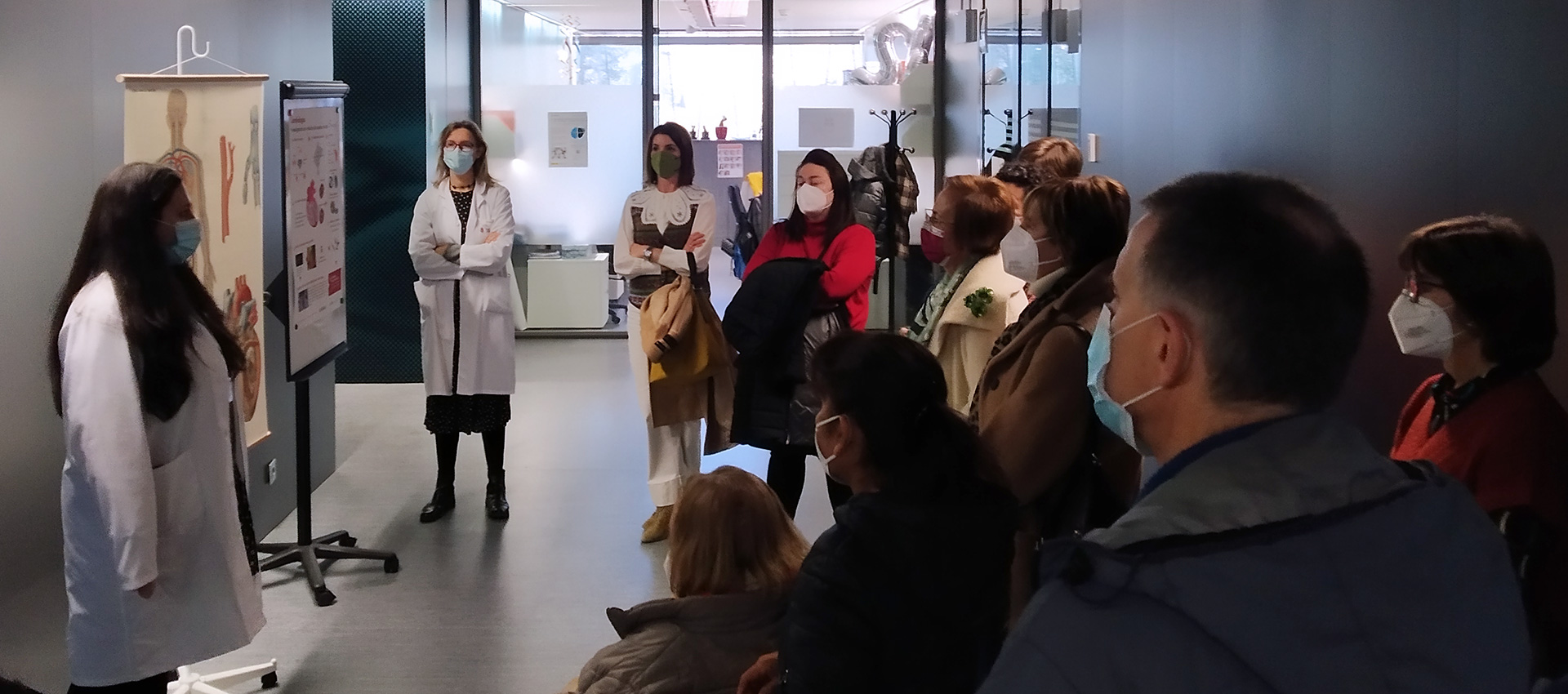
Durante la primera jornada de puertas abiertas, celebrada el 11 de noviembre, una quincena de personas acudió para conocer dos de los laboratorios del centro. La visita comenzó en la Unidad de investigación de Cardiología traslacional situada en la segunda planta y la investigadora principal, Natalia López Andrés, fue la encargada de mostrarles las investigaciones que desarrollan en valvulopatías junto a profesionales del Servicio de Cardiología del Hospital Universitario de Navarra.

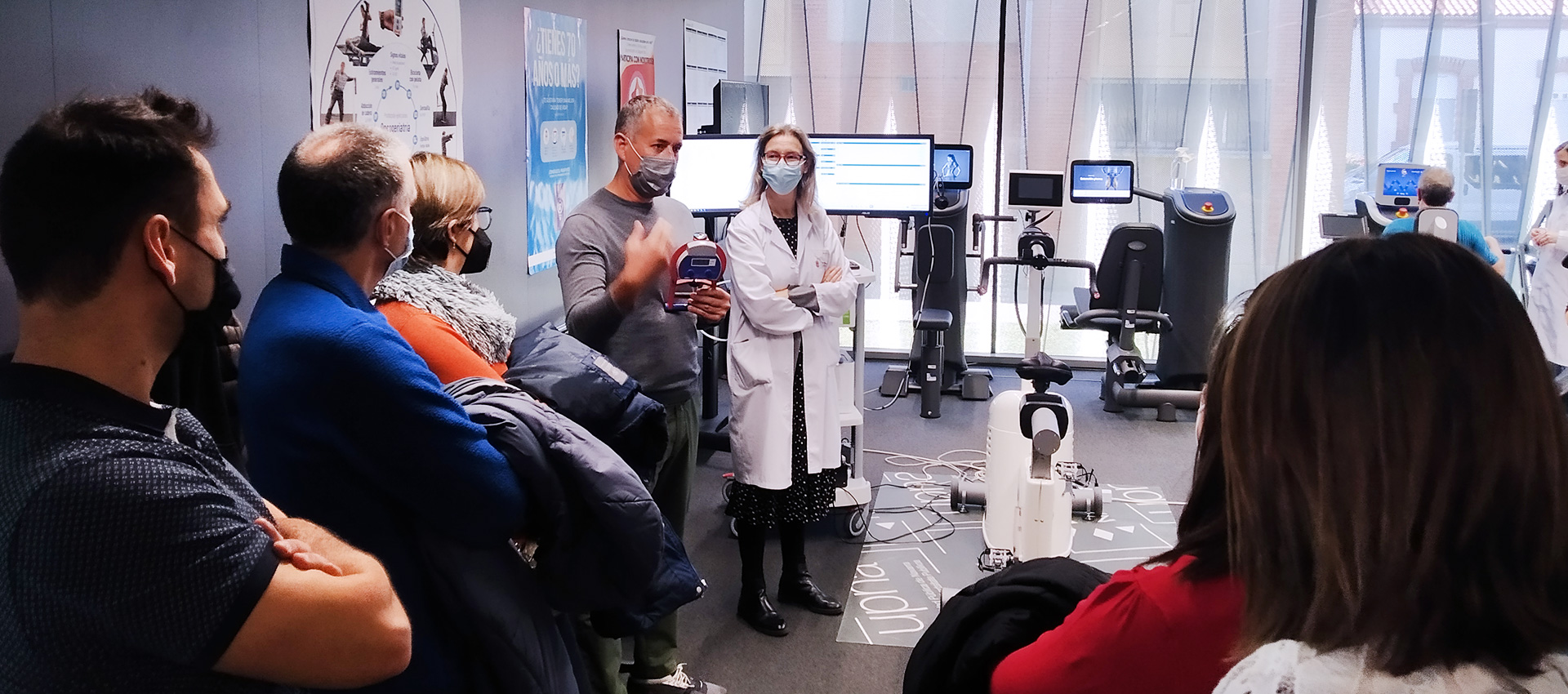
A continuación, el grupo pudo conocer el espacio de entrenamiento funcional donde acuden, entre otros, pacientes del Servicio Navarro de Salud - Osasunbidea de Geriatría, Oncología Médica o de Medicina Interna con secuelas de COVID persistente para formar parte de diversos estudios e investigaciones. Mikel Izquierdo Redín responsable de la Unidad E-FIT expuso el efecto del ejercicio físico en el ámbito del envejecimiento saludable, fragilidad, deterioro cognitivo y riesgo de caídas. Junto a él participó también Antonio García Hermoso, responsable de la Unidad de Actividad física infanto-juvenil, que estudia el efecto del ejercicio físico sobre la salud física y mental de jóvenes sanos y aquellos con patologías diagnosticadas. 

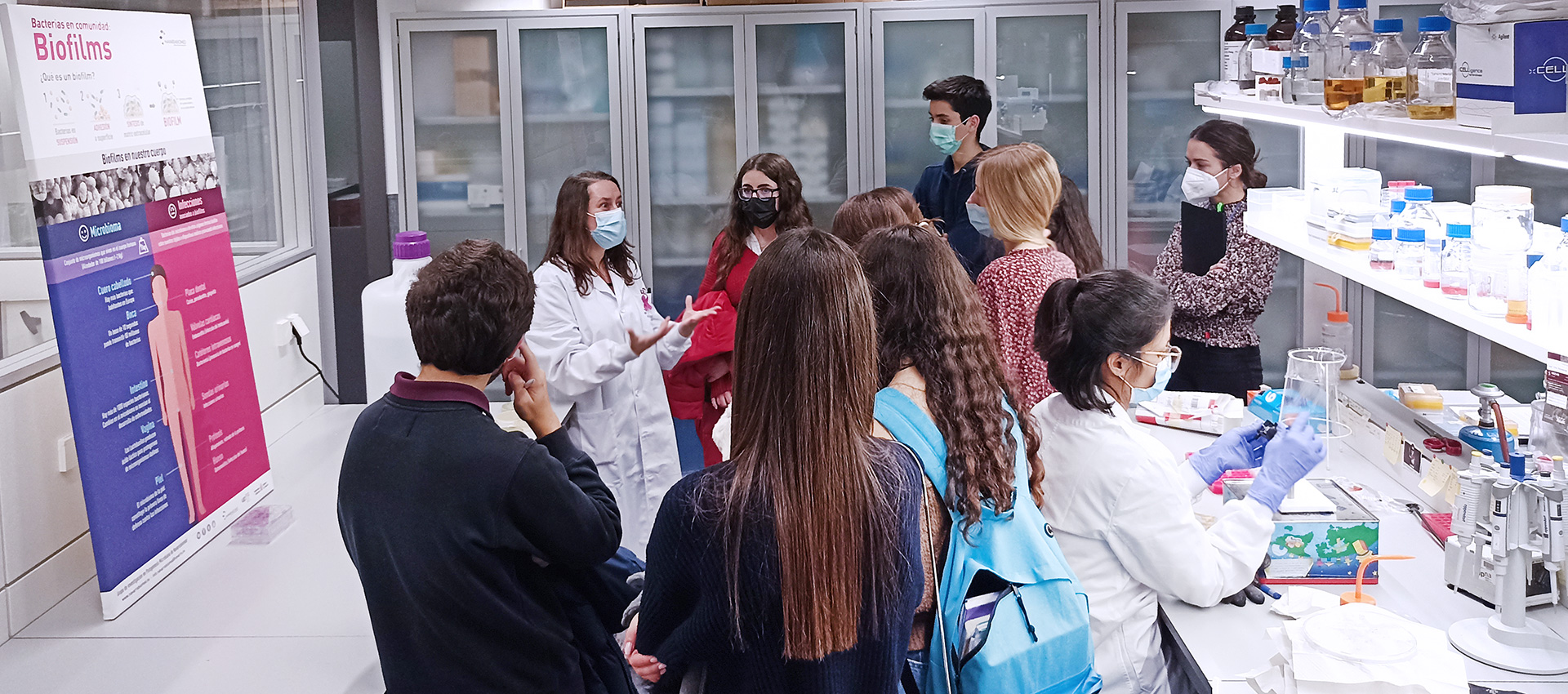
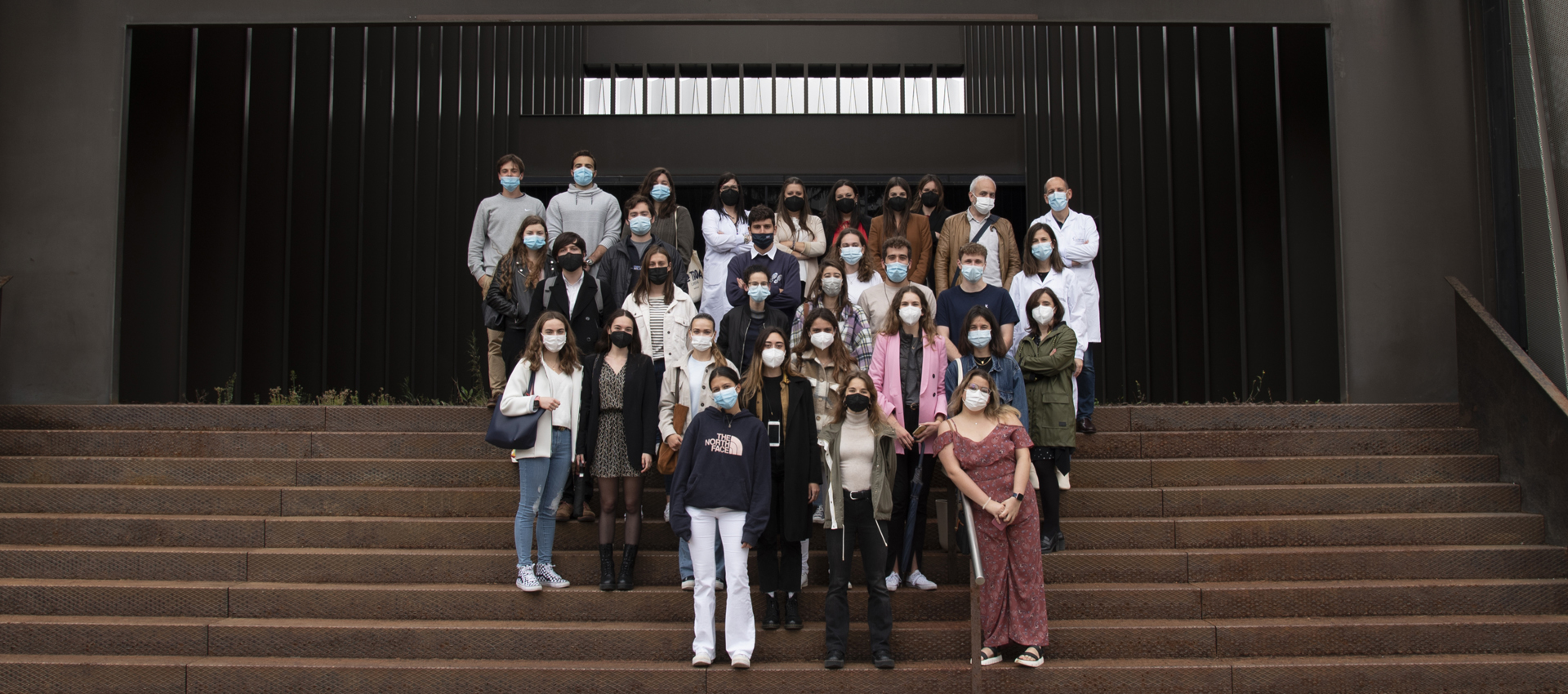
La segunda jornada se organizó el pasado jueves, 18 de noviembre, y estaba orientada al fomento de las vocaciones científicas entre los jóvenes. Un total de 70 estudiantes de Bachillerato, FP y primeros cursos de grados universitarios de varios centros participaron en la visita para conocer el mundo de la investigación biomédica y las posibilidades que ofrece el sector tanto en el ámbito público como en el privado.

La sesión comenzó con una sesión a cargo del director de Navarrabiomed Iñigo Lasa, que fue el encargado de presentar el centro y su actividad científica. Tras su intervención, el alumnado se dividió en grupos reducidos para visitar los laboratorios de Patogénesis Microbiana, Medicina Genómica, Señalización en Cáncer, Proteómica y OncoInmunología junto a varios investigadores/as. Los y las estudiantes mostraron gran interés por la variedad de técnicas realizadas, también se interesaron sobre la organización interna y las actividades diarias que deben realizar el personal (técnicos/as, predocs, postdocs, etc.) para llevar al día la investigación), por su parte otras personas demandaron consejos prácticos para aquellos que quieren formarse para dedicarse a la investigación. 

Categoría
Galería de imágenes
Laboratorio de Señalización en cáncer
Download Flecha que indica descarga
Laboratorio de Proteómica
Download Flecha que indica descarga
Laboratorio de Patogénesis Microbiana
Download Flecha que indica descarga
Laboratorio de Medicina Genómica
Download Flecha que indica descarga
Cardiología traslacional
Download Flecha que indica descarga
Espacio de ejercicio físico funcional
Download Flecha que indica descarga
Documentación

Visit from French team of European Optimage POCTEFA Project

Equipo francés del proyecto europeo Optimage POCTEFA
Author
Navarrabiomed

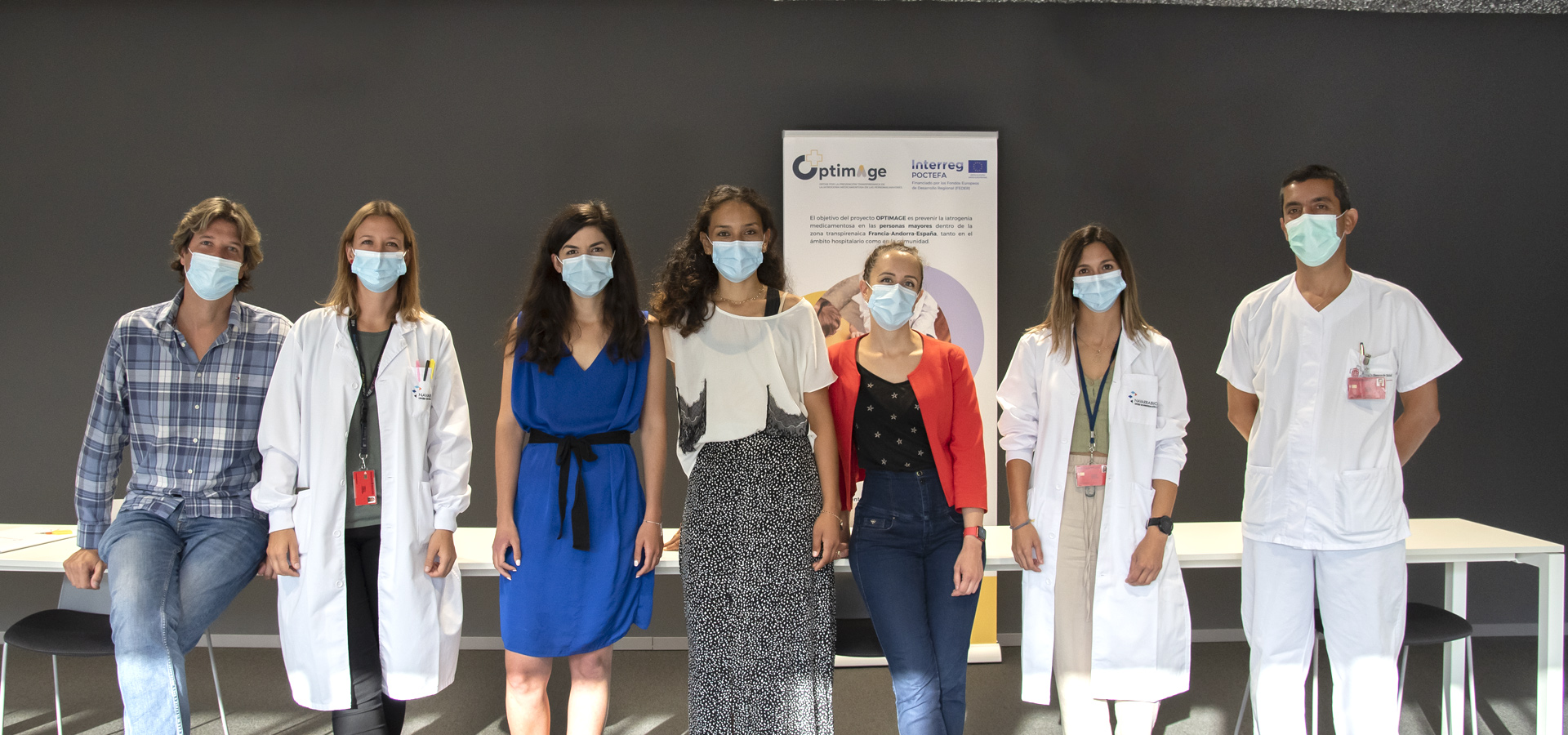
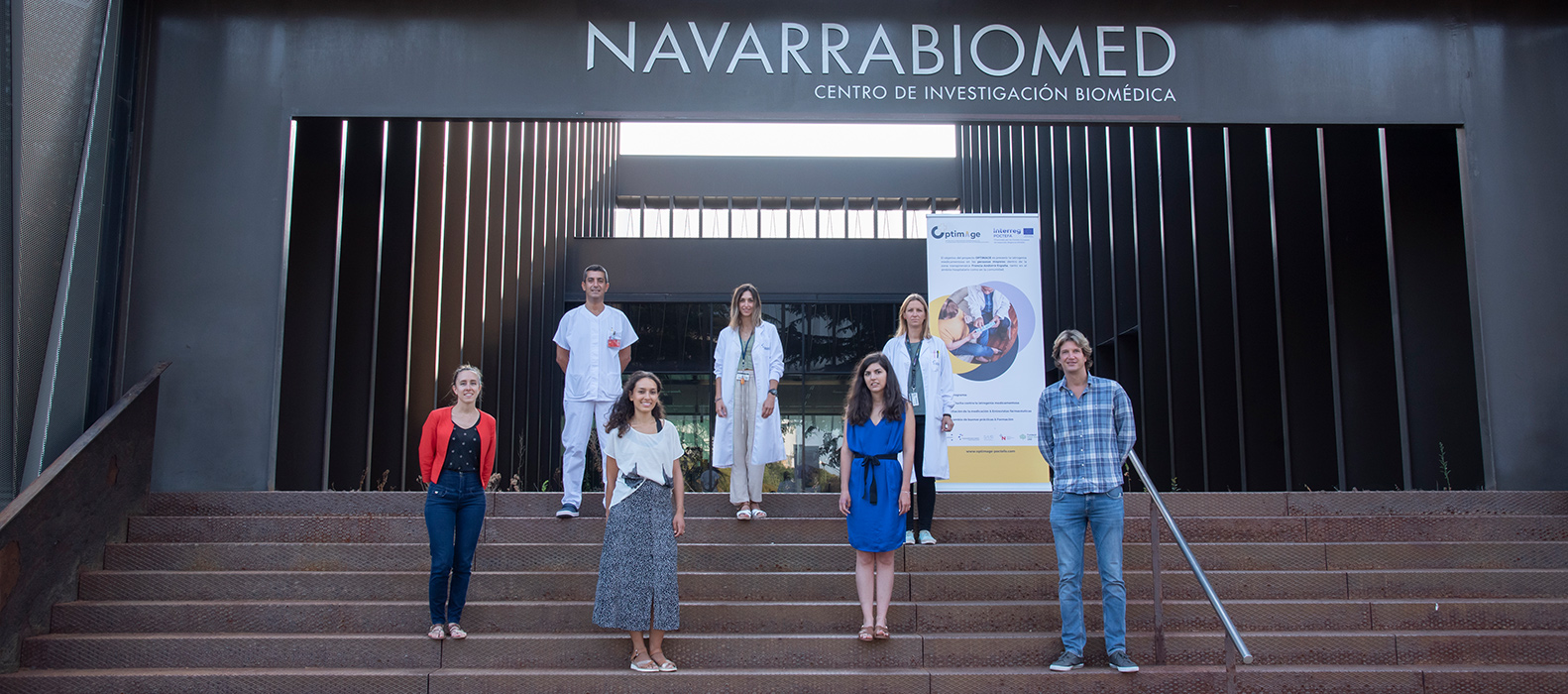
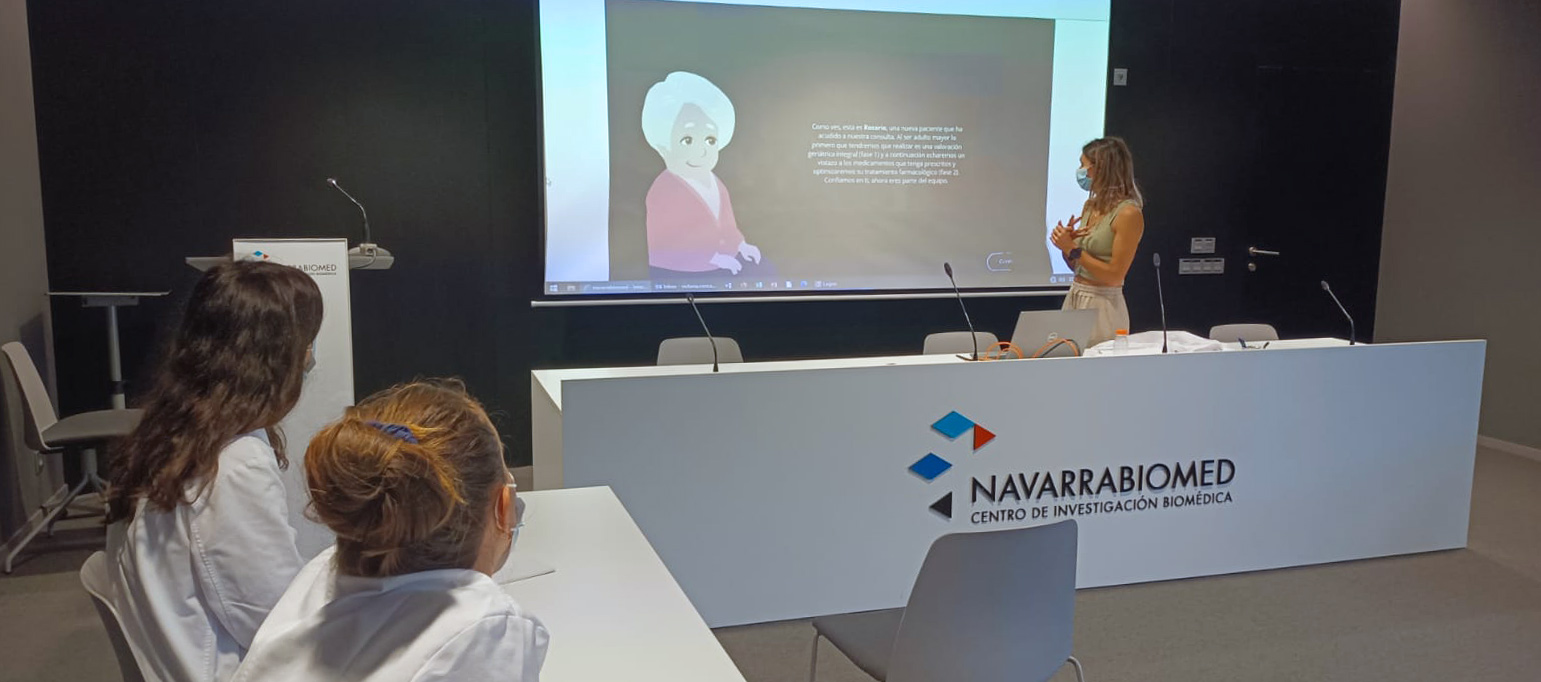
On September 19-20, members of the French team of the European Optimage POCTEFA Project, led by chemist Soraya Qassemi of the Hospital Center of Toulouse (CHU), traveled to Pamplona to visit the facilities and meet the people in Navarre with whom they had been working since 2019. Optimage, which is managed in Navarre by Nicolás Martinez Velilla, principal investigator of the Navarrabiomed Geriatrics Research Unit and head of the Geriatrics Service at the Hospital Complex of Navarre (CHN), is a European project for the prevention of drug iatrogenesis in the elderly living in the Pyrenees.

During the visit, Victoria Roncal, the project coordinator in Navarre, gave the French group a tour of the Navarrabiomed facilities and the Geriatrics Service, as well as the Pharmacy Service of the CHN, the Drug Information and Advisory Service and the Bidealde socio-sanitary center. This gave the professionals the chance to learn about the work being done in Navarre on the prevention of drug iatrogenesis in the elderly in different work contexts.

The project is co-funded (65%) by the European Regional Development Fund (ERDF) through the Interreg Program V-A Spain-France-Andorra (POCTEFA 2014-2020). The goal of the POCTEFA Program is to strengthen the economic and social integration of the Spain-France-Andorra cross-border area. Its help is focused on developing cross-border economic, social and environmental projects through joint strategies in favor of sustainable regional development.

Categoría
Galería de imágenes
CHUT staff visit Navarrabiomed
Download Flecha que indica descarga
Hospital staff
Download Flecha que indica descarga
Victoria Roncal during the meeting
Download Flecha que indica descarga
Documentación
Vídeo

Visit from Universidad de Navarra School of Sciences students

Estudiantes de la Facultad de Ciencias de la Universidad de Navarra
Author
Navarrabiomed

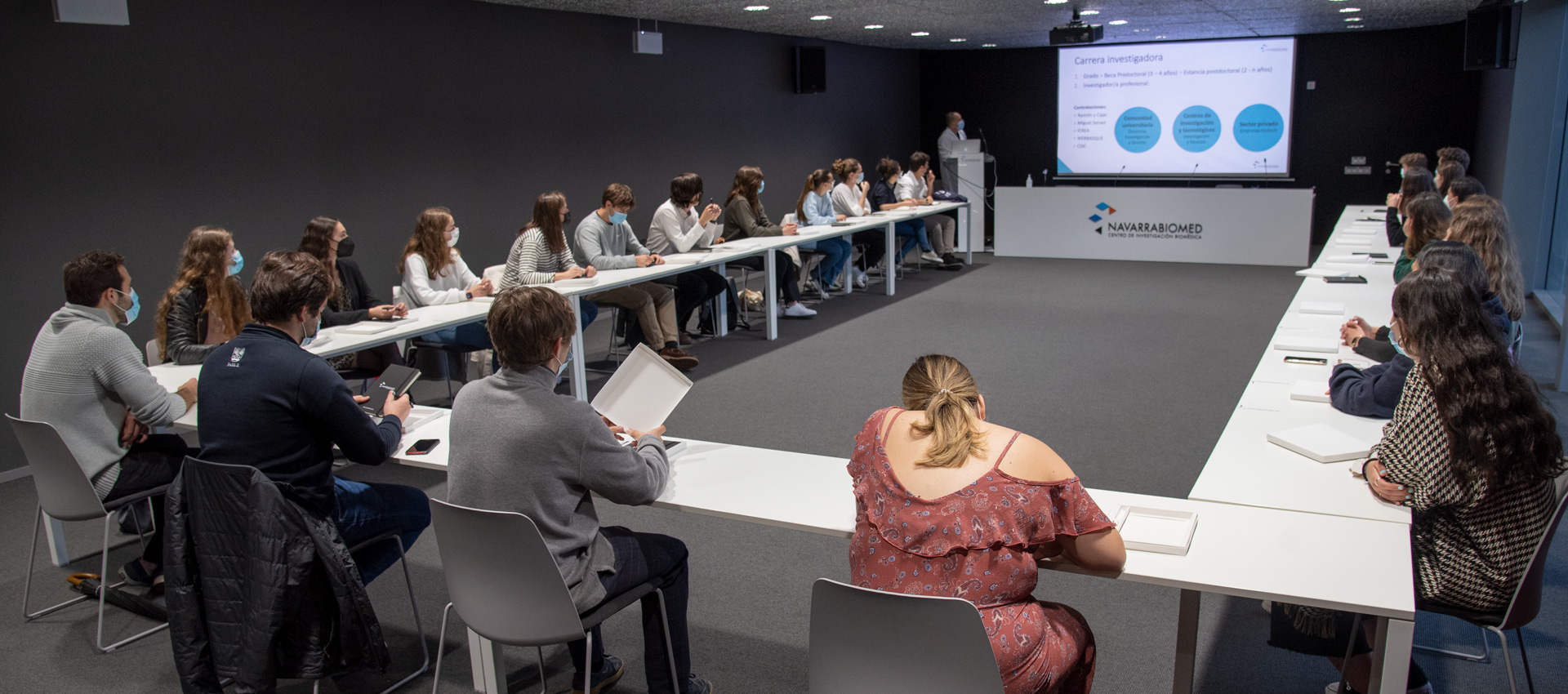
A total of 24 second- and third-year students in the Biology, Biochemistry and Chemistry degree programs at the Universidad de Navarra visited the Navarrabiomed facilities on Friday, June 4, to acquire firsthand knowledge about the work done at the biomedical research center.

Iñigo Lasa Uzcudun, Director of the center and principal investigator in the Microbial Pathogenesis Unit, welcomed the group members and introduced them to Navarrabiomed. He also described the center’s main scientific milestones and achievements in biomedicine in recent decades and listed the wide range of career options available in research.

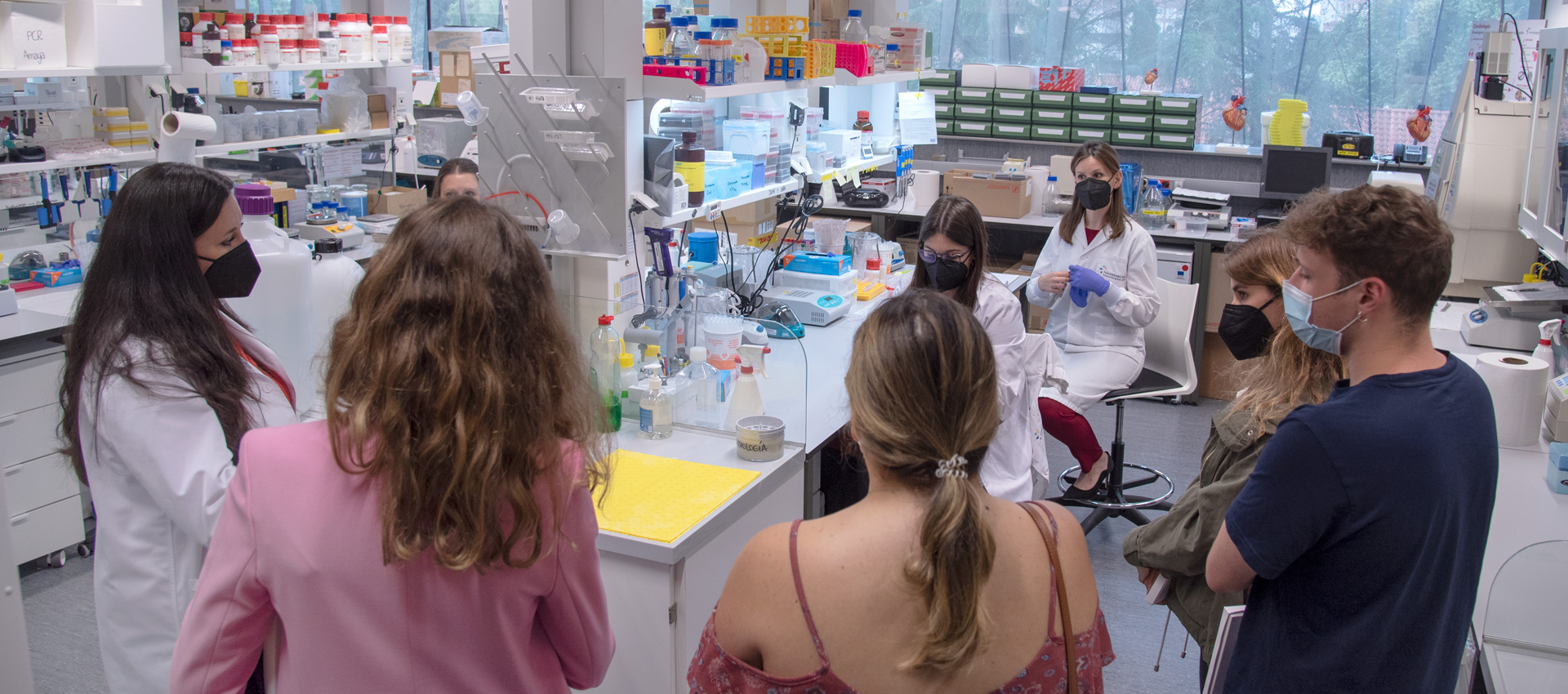
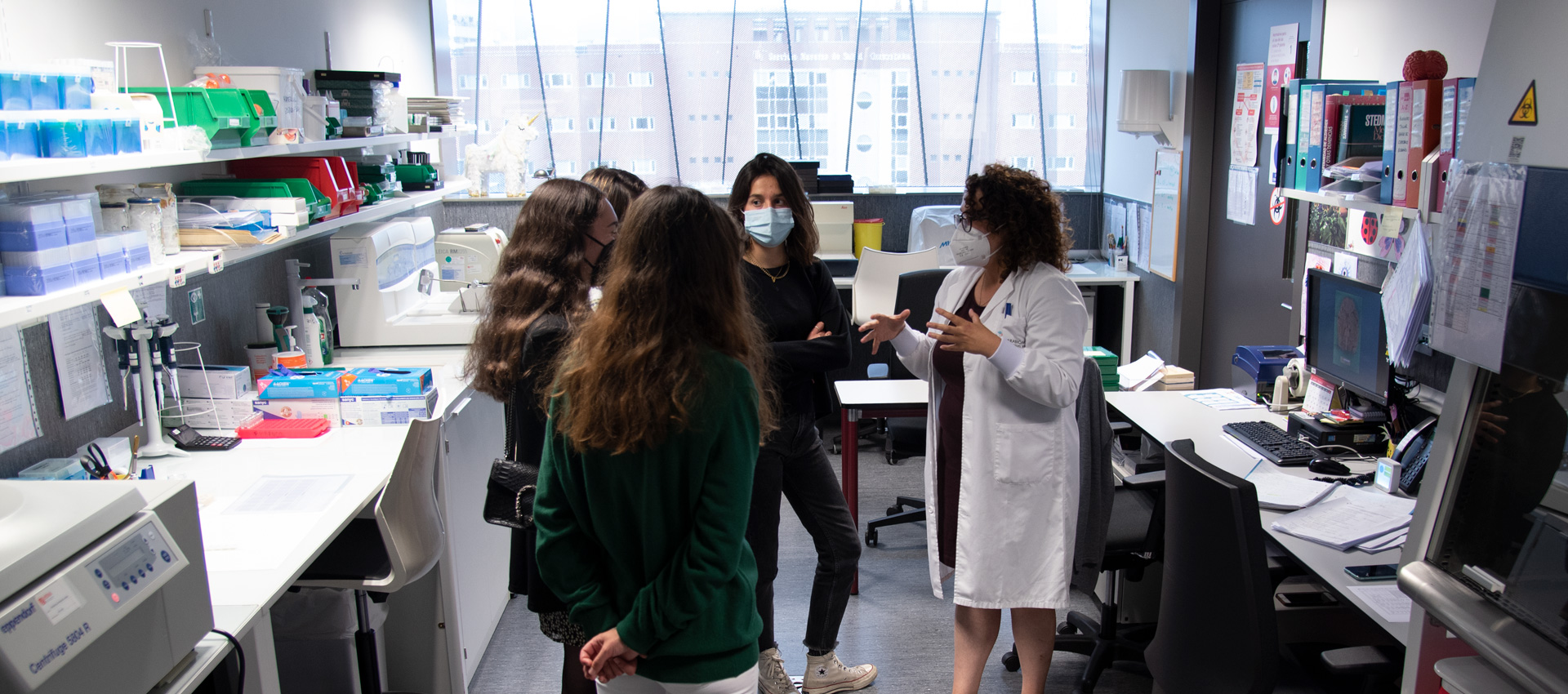
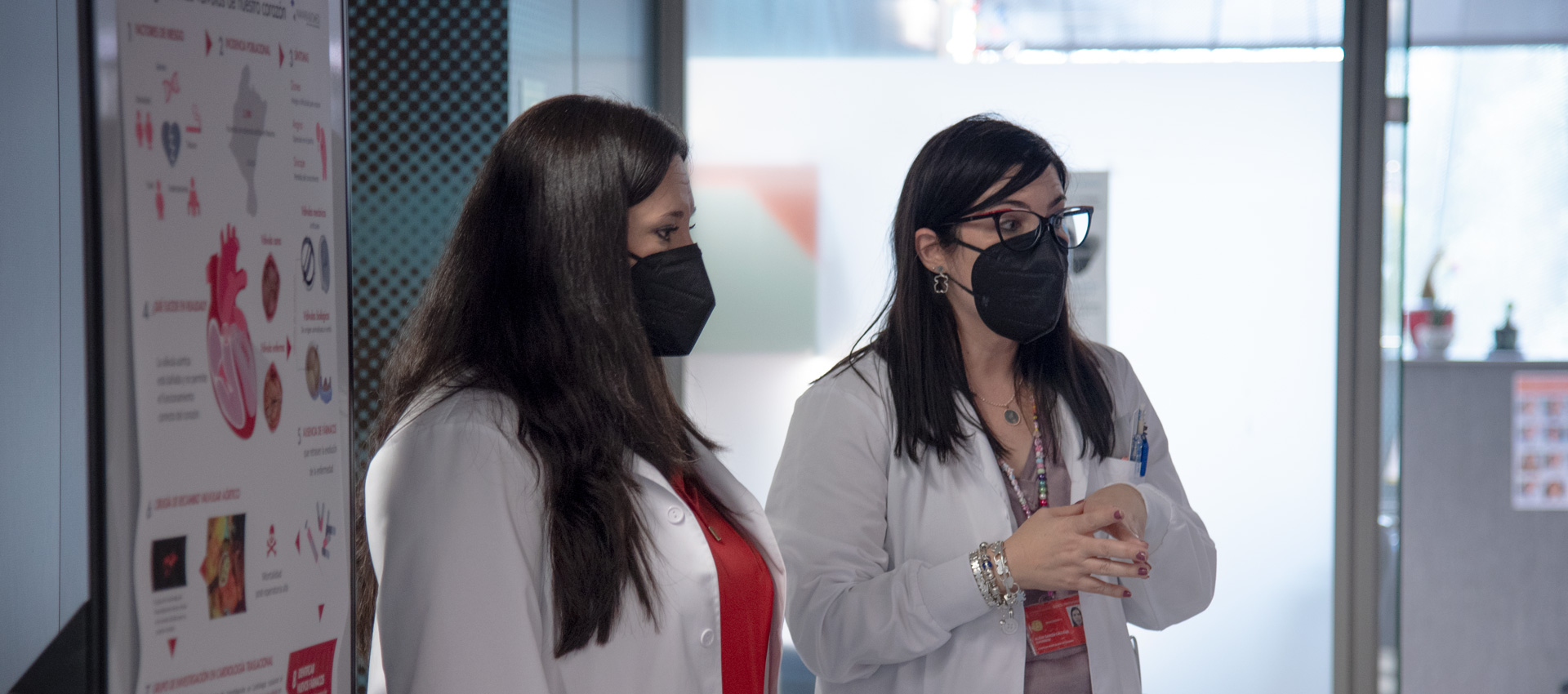
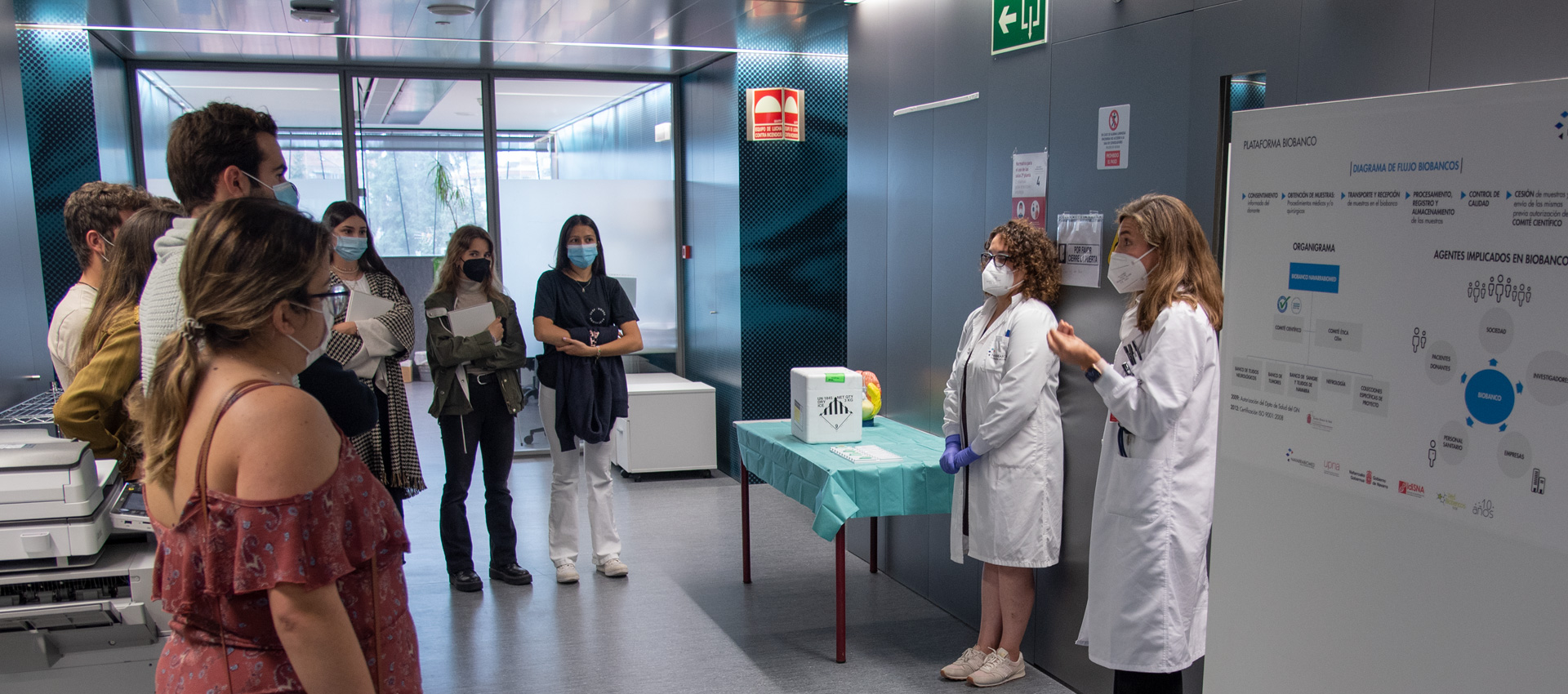
The students were then divided into two groups to visit two different labs: the Translational Cardiology Research Unit laboratories and the Navarrabiomed Biobank. At the laboratories of the Translational Cardiology Research Unit, principal investigator Natalia López Andrés and her team described the studies they carry out in coordination with the Cardiology Service at the Hospital Complex of Navarre. Special emphasis was placed on the research being done to obtain new treatments to prevent heart valve damage and improve treatment of infective endocarditis. The students also received a guided tour of the Biobank from Isabel Gil Aldea, the Biobank Scientific Director, and Valle Coca Pueyo, a Biobank technician. The mission of the Navarrabiomed Biobank, in collaboration with different clinical services at the Hospital Complex of Navarre, is to collect, process and distribute human biospecimens, and thus contribute to the development of biomedical and translational research on different disorders.

This visit to Navarrabiomed forms part of the Science and Business Program of the Universidad de Navarra and the Center for Business Innovation of Navarre (CEIN), a specialist diploma offered this year from May 31 to June 4. The program includes visits to biotech companies, meetings with professionals working at technology and research centers, and sessions on entrepreneurship.

Navarrabiomed organized this visit in accordance with COVID-19 safety protocols and regulations in effect in Navarre.

Categoría
Galería de imágenes
Iñigo Lasa during the meeting
Download Flecha que indica descarga
Natalia López shows the Cardiology laboratories
Download Flecha que indica descarga
Valle Coca explains the organization of the Biobank platform
Download Flecha que indica descarga
Natalia López y Alicia Gainza from the Traslational Cardiology Unit
Download Flecha que indica descarga
Isabel Gil y Valle Coca during their speech
Download Flecha que indica descarga
Documentación
Vídeo